Friday, 4 November 2022

The MioD of the Russian Federation announced the launch of a nuclear submarine during tests of the Bulava ballistic missile from the White Sea

Photo Russian Federation Defence Ministry


Минобороны РФ сообщило о пуске атомной подлодкой в ходе испытаний баллистической ракеты "Булава" из Белого моря -

03.11.2022 19:40:06

       Moscow. the 3rd of November. INTERFAX - The new Russian strategic nuclear submarine Generalissimo Suvorov, which is completing state tests, fired a Bulava missile from the White Sea at a firing range in Kamchatka, the Russian Defense Ministry said on Thursday.

       "Rocket firing was carried out from a submerged position from the White Sea at the Kura range on the Kamchatka Peninsula," the report says.

       "The flight of the Bulava ballistic missile took place in the normal mode. According to the confirmed objective control data, the warheads of the missile successfully arrived in the designated area of ​​the Kura battlefield," the Russian Defense Ministry said.

       "The crew of the latest Borei-A project Generalissimo Suvorov strategic missile submarine successfully fired the Bulava ballistic missile as part of the final stage of state tests," the Defense Ministry said.

       The Generalissimo Suvorov is the second serial submarine of the Borey-A project. Built at the production association "Sevmash" in Severodvinsk.

       The submarine belongs to the fourth generation of nuclear submarine missile carriers, equipped with modern complexes of missile and torpedo weapons, navigation, radio engineering and sonar weapons. It has high maneuverability and acoustic stealth, the Defense Ministry said.

       On October 30, Commander-in-Chief of the Russian Navy Nikolai Evmenov announced the tests of the Generalissimo Suvorov in his congratulations on the 326th anniversary of the creation of the Russian regular fleet.  

       1ff dr ml


Thursday, 3 November 2022

Military expert spoke about the capabilities of the X-32 cruise missile

Artyom Anikeev


Военный эксперт рассказал о возможностях крылатой ракеты X-32

November 3, 2022

The Russian Kh-32 air-launched cruise missile is capable of striking sea vessels and ground targets. Military expert Alexei Leonkov told Izvestia about her combat readiness.

According to him, the Kh-32 air-to-ship cruise missile is a high-precision weapon that can be used to destroy ground targets.

The expert also added that the X-32, having a launch range of about 600 kilometers, is used to destroy ships of the first rank, it is capable of incapacitating or sinking a ship. Depending on the type of ship, the order of missiles is calculated. Leonkov stressed that a supersonic missile can use various anti-aircraft maneuvers, which reduces the chances of its destruction.

The military expert noted that the X-32 cruise missile has different flight and approach profiles to the target. He pointed out that the Ukrainian air defense systems, apparently, are not familiar with the X-32 radiation aperture.

Earlier it became known about a series of launches of new X-32 supersonic anti-ship cruise missiles at ground facilities of Ukraine's military infrastructure. This was written by the Telegram channel "Radiotochka NSN".


Source nsn.fm


Tupolev Tu-22M/22M3/22M3M: Details

Tuesday, 1 November 2022

Engine tests for a promising strategic missile carrier took place in Russia

Chris Lofting


Испытания двигателя для перспективного стратегического ракетоносца прошли в России

October 31, 2022 03:53

Prototypes of the latest engine "Izdeliye RF", designed for a promising long-range aviation complex (PAK DA), have successfully passed bench tests. This was announced by a source in the military-industrial complex.

Based on the results of the tests, the engine samples confirmed all the characteristics laid down in it. According to the source, the tests are currently ongoing. Also now, UEC-Kuznetsov (part of Rostec) is actively preparing for the production of the engine, TASS reports .

“Several prototypes of the engine have already passed part of the bench tests. Now the tests are ongoing. Based on their results, we can say that the engine confirms the parameters laid down in it, ”the message says.

Earlier it became known about the testing of a new strategic nuclear submarine (NPS) "Generalissimo Suvorov". This submarine was built at the Sevmash plant in Severodvinsk.


life.ru

Saturday, 29 October 2022

Embraer Signs MoUs for Cooperation with the Aerospace Industry in South Korea

Matheus Miranda Silva


Embraer: news - Embraer Signs MoUs for Cooperation with the Aerospace Industry in South Korea

  • Main goal is to strengthen collaboration with partners in the country
  • MoUs are intended to create long-term relationships which will endure for the LTA II Program and beyond


Seoul, South Korea, October 27, 2022 – Embraer announced today that it has signed several Memorandums of Understanding (MoUs) with the aerospace companies ASTG (Aerospace Technology of Global), EMK (EM Korea Co.) and Kencoa Aerospace, from South Korea with the objective of strengthening collaboration with Korean defense industry partners for the future supply of parts for the C-390 Millennium aircraft. The C-390 Millennium aircraft is competing in the Large Transport Aircraft (LTA) II Program being run by the Defense Acquisition Program Administration (DAPA).

The potential supply of South Korean manufactured parts will contribute to the offset requirements of the LTA II Program. The MoUs intend to create long-term business relationships between the parties which will endure for the LTA II Program and beyond. Local industry capabilities can also be part of future developments within Embraer’s existing platforms such as the C-390 Millennium as well as new aircraft, vehicles, and systems.

“Embraer is very confident on the mutual benefits to be gained from this collaboration, thus creating a sustainable and growing relationship between Embraer and the partners in South Korea”, said Jackson Schneider, President & CEO, Embraer Defense & Security. “By offering more than 50 years of experience in aviation, technology and innovation, Embraer is looking to establish meaningful partnerships in South Korea to create new businesses and solutions.”

The C-390 Millennium and its aerial refueling configuration, the KC-390, are the new generation of multi-mission military transport delivering unrivaled mobility and cargo capacity, rapid re-configuration, high availability, enhanced comfort, as well as optimal management of reduced operational costs throughout its lifecycle, all on a single platform.

Since the first delivery to the Brazilian Air Force (FAB), the KC-390 Millennium has proven its capability, reliability, and performance. FAB's current fleet of KC-390 stands at five units. The fleet has already exceeded 7,000 flight hours in operation, with a 99% mission completion rate, demonstrating excellent availability and productivity in its category.

In June 2022, the Netherlands Ministry of Defense announced the selection of the C-390 Millennium to replace the current fleet of C-130 Hercules. The Portuguese Armed Forces and the Hungarian Defense Forces will begin operations with the KC-390 in 2023 and 2024, respectively. The three European countries' fleets will be capable of performing aerial refueling and be fully NATO compatible.


Embraer KC-390: Details

Thursday, 27 October 2022

Submarine "Ufa" will enter the fleet in November - Commander-in-Chief of the Navy (version 2)

Veliky Novgorod / photo by A. Brichevsky


Подлодка "Уфа" войдет в состав флота в ноябре - главком ВМФ (версия 2) -

19.10.2022 22:22:50

      (the surname of the Commander-in-Chief of the Navy has been corrected)

       Moscow. 19 October. Interfax - The Admiralty Shipyards has completed the sea part of the state tests of a large diesel-electric submarine of project 636 "Ufa" in the Baltic Sea ranges, in November it will become part of the Russian Naval Forces, Commander-in-Chief of the Russian Navy Admiral Nikolai Evmenov said. His words were quoted on Wednesday by the press service of the Russian Defense Ministry.

       "During the tests, the functioning of a number of ship devices, mechanisms and equipment, as well as hydroacoustic and navigation systems was tested. The submarine successfully completed dives to various depths, the crew and employees of the Admiralty Shipyards checked and assessed the maneuverability and controllability of the submarine on different chassis depths," Evmenov said following the meeting, which discussed the issues of non-nuclear submarine shipbuilding.

       The Commander-in-Chief of the Navy was informed that the submarine is currently undergoing revision and finishing at the Admiralty Shipyards in preparation for signing the acceptance certificate.

       "Issues of service maintenance of diesel-electric submarines" Ufa "were further worked out. Repair and technical documentation for submarines of project 636 was developed by the 51st Central Design and Technological Institute of Ship Repair, which has rich experience in this area," the Defense Ministry said.

       Ufa, the fourth submarine of the series for the Pacific Fleet, was laid down in November 2019 with the participation of the Commander-in-Chief of the Russian Navy.

       Submarines of the modified 636 project have a higher combat effectiveness compared to previous projects. The optimal combination of acoustic stealth and target detection range, the latest inertial navigation system, a modern automated information and control system, powerful high-speed torpedo-rocket weapons provide the world priority for ships of this class in the field of non-nuclear underwater shipbuilding, the Russian Defense Ministry emphasizes.

       As Yevmenov noted earlier, “until 2024, the Russian Navy plans to receive the entire series of six Project 636.3 diesel-electric submarines being built at the Admiralty Shipyards purposefully to equip the submarine forces of the Pacific Fleet.”

       ml md


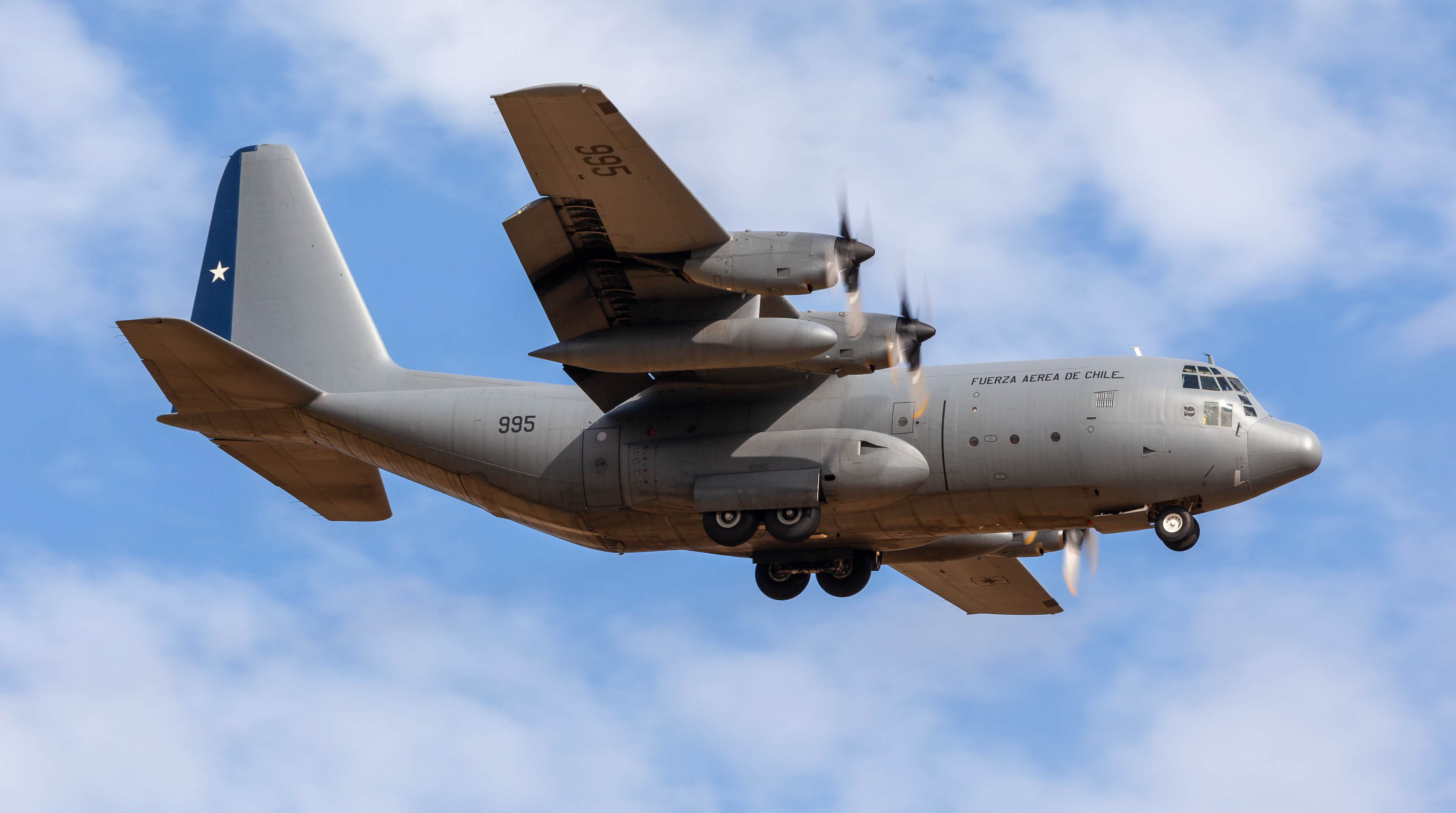
Collins Aerospace announces new orders for C-130 NP2000 propeller system

Les York


News | Collins Aerospace announces new orders for C-130 NP2000 propeller system | Collins Aerospace

October 24, 2022

  • Chilean Air Force signs on as first C-130 NP2000 international customer
  • Integration of NP2000 on the first international C-130 is now complete
  • Composite blades, electronic control system increase thrust, while reducing noise and maintenance

WINDSOR LOCKS, Conn. (October 24, 2022) – Collins Aerospace announced today that the first Chilean Air Force (CAF) C-130 has successfully upgraded to the NP2000 propeller system. The completion of this install marks a major milestone as it serves as the first international C-130 upgraded with NP2000.

Under the order, Collins will upgrade the Chilean Air Force’s C-130 fleet including C-130B, C-130E, KC-130R and C-130H model variants.

"This installation of the full NP2000 propeller system marks the first international modernization of the C-130 for the Chilean Air Force,” said Quinlan Lyte, senior director, Propeller Systems, Collins Aerospace. “Our innovative NP2000 system incorporates sophisticated, state-of-the-art technologies designed to enhance efficiency and boost aircraft availability, as well as reducing crew fatigue and safety. We look forward to continuing to work with the Chilean Air Force and other future international customers to help them maximize the performance and availability of their C-130 fleet."

With its eight composite blades and the Electronic Propeller Control System (EPCS), the NP2000 propeller systems offers several benefits compared to our legacy systems including: up to 20 percent thrust increase during take-off, approximately 20db sound reduction in the cockpit and up to 50 percent reduction in maintenance hours. Along with C-130 variants, NP2000 has been in service with U.S. and international customers on the Northrop Grumman E-2 and C-2 since 2004 with over one million flight hours. NP2000 is also planned for use on the P-3 Orion.


C-130J Hercules: Details

Wednesday, 26 October 2022

UAC announced the first flight of the upgraded Su-57

Vladislav Perminov


ОАК сообщила о первом полёте модернизированного Су-57 -

Su-57    photo UAC

Moscow. the 25th of October. INTERFAX-AVN - The upgraded Su-57 aircraft performed its first flight on October 21 this year, the United Aircraft Corporation (UAC) reported on Tuesday.

      "The Sukhoi Design Bureau as part of the UAC is working to improve the Su-57. On October 21, the first flight of the upgraded fifth-generation Su-57 aircraft took place at the airfield of the Flight Research Institute named after M.M. Gromov (Moscow Region - IF). The aircraft was piloted by a test pilot of the Sukhoi Design Bureau , Hero of the Russian Federation Sergei Bogdan. The flight lasted 56 minutes and passed without remarks," the report said.

     According to the UAC, "on-board equipment with extended functionality, intelligent crew support and the possibility of using a wide range of new types of weapons is being tested on the aircraft."

     "Also, the aircraft is provided with the possibility of installing a second-stage engine," the press release says.

     The Su-57 was developed by the Sukhoi company (part of the UAC) and is manufactured at the Komsomolsk-on-Amur Aviation Plant (KnAAZ). This is a fifth-generation multi-role fighter designed to destroy all types of air targets in long-range and close combat, to destroy enemy ground and surface targets while overcoming air defense systems. Its first flight took place on January 29, 2010.

     Supersonic cruising speed and in-fuselage weapons are the hallmarks of the fifth generation of fighters. It was reported that the first Su-57s would be produced already in serial form, but with engines of the previous generation. The engine of the "second stage" (product of the 30th production of the United Engine Corporation, UEC), which will provide the Su-57 with supersonic cruising speed, began flight tests in December 2017.

     The first serial Su-57 entered the Russian Aerospace Forces at the end of 2020. It is officially stated that by the end of 2024, the Russian military plans to receive 22 more such aircraft. In total, by 2028, 76 fifth-generation fighters should be produced, which will equip three air regiments.

     It was reported about the use of this aircraft during the fighting in Syria and Ukraine.