 |
| sinodefenceforum.com |
Not J-20 or J-16, Su 35 was defeated in the exercise, Cheng Fei made a contribution
Translated by google
2020-06-24
The picture shows the J-10C fighter
Recently, a fierce contest was staged in the Chinese Air Force’s actual combat exercise. It is understood that the Su-35, a three-generation half-fighter imported from Russia, was rarely defeated in this exercise, but the opponent who defeated it was neither J-20 nor J-16. It was the J-10C developed by Chengfei, who had to admit that Chengfei had made contributions to the development of the Air Force this time.
The picture shows the J-10C fighter
Some analysts believe that the reason why the J-10C fighter can defeat the heavy air superior fighter Su 35 in the exercise is because the J-10C is more flexible in close combat. Since the J-10C is a medium-sized fighter, it is suitable for the heavy fighter Su 35 in close combat. The flying attitude is more flexible, it can easily get rid of the Su 35’s lock, and the tail of the Su 35 can be bitten down through tactical actions to shoot it down, and in over-the-horizon air combat, the advanced air-to-air missile equipped with the J-10C will make the J-10 C also has great advantages. This air-to-air missile has a longer range, more maneuverability, and more powerful sensors, making the J-10C have the ability to attack it outside the range of the Su 35.
The picture shows the J-10C fighter
In fact, as another main fighter of China, Su 35 itself also has a very powerful combat capability. This fighter was developed by the Russian Sukhoi Design Bureau based on the deep improvement of the Su 27 fighter. It is a three and a half generation. Heavy-duty dual-engine air superiority fighter with long-range and multi-purpose characteristics. Compared with the J-10C, the Su-35 has a longer range, a larger combat radius, and more ammunition. It has 12 weapon hanging points and can carry a total weight. 8 tons of weapon load, in addition, this fighter has a special ability, that is, the formation of 4 aircraft information exchange ability, this ability means that when 4 Su 35 fighters form a formation, if one of Su 35 takes the lead in finding the target The target information will be quickly shared with other members of the formation, which reflects Su 35's outstanding ability to perceive the situation on the battlefield.
In addition, the Su 35 fighter has a great advantage in the discovery and attack of the enemy. The large size of the Su 35 allows it to carry a heavier and larger radar, and it is equipped with the Russian Snow Leopard E phased array. The radar detection range can reach more than 400 kilometers, which represents the highest level of Russian airborne fire control radar. When fighting non-stealth targets, Su 35's powerful radar can detect non-stealth targets early, which makes Su 35's air combat advantage quite obvious .
The picture shows the Su 35 fighter
Of course, the performance characteristics of the J-10C fighter are also very prominent. In addition to more flexible flight attitude, the J-10C combat radius and ammunition capacity are absolutely sufficient. It can carry more than 4 tons of ammunition, although the ammunition carrying capacity is not as good as that of the Soviet Union. 35, but J-10C has more advanced active phased array radar and avionics equipment, its radar has a greater detection range, and has the ability to track 12 targets at the same time, to attack 6 of the most threatening targets, In addition, the J-10C is also equipped with a more advanced air-to-air missile. This missile has a long range, strong anti-interference ability, and is a very threatening weapon. With it, the J-10C can defeat the Su 35 in the exercise. Not surprising.
All in all, Su 35 and J-10C are very good performance fighters, each with different performance characteristics. The two types of fighters conduct such confrontational actual combat exercises, fighting wisely and bravely in an environment suitable for actual combat. Combat literacy has been significantly improved, and it has a strong help in building a modern air force.
 |
| Tsungfang Tsai |
AJT trainer jet is new design not upgraded IDF: test pilots - Focus Taiwan
06/22/2020
President Tsai Ing-wen (蔡英文, center) and Air Force pilots pose with the advanced jet trainer (AJT) code-named Brave Eagle / CNA photo June 22, 2020
Taichung, June 22 (CNA) Taiwan's first indigenous advanced jet trainer (AJT), codenamed Brave Eagle, is a brand-new design not an upgraded version of the decades-old Indigenous Defense Fighter (IDF), two test flight pilots told media Monday after completing the trainer's inaugural public flight in Taichung earlier in the day.
Although the jet looks similar to the IDF, which has been used by Taiwan's Air Force since 1992, 80 percent of the AJT's components are newly designed, including its exterior and pneumatics, said pilot Lu Chih-yuan (路志元).
Echoing Lu's view, co-pilot Kuan Yen-nien (管延年) said the cockpit design of the AJT is also different from that of the IDF.
The cockpit of the two-seat AJT is similar to that of the F-16 fighter, which has an aft-seat 4K ultra HD HUD monitor, providing the back-seat co-pilot with a clear view of the front, according to Kuan.
The monitor can also display all the information a back seat pilot needs to know in order to fly the jet, even landing it if necessary, Kuan said.
Lu and Kuan made the remarks when asked to comment on the differences between the two aircraft, both designed and built by the government-funded Aerospace Industrial Development Corp (AIDC).
CNA photo June 22, 2020
Earlier Monday, the two civilian pilots, both retired Air Force pilots, conducted the first public flight of the Brave Eagle, or "Yung Yin (勇鷹)" with President Tsai Ing-wen (蔡英文) attending a ceremony held at Taichung's Ching Chuan Kang air base.
The Brave Eagle, serial number 11001, took off from the air base at 9:20 a.m. Monday, carried out a series of tests that included its ground run, high speed rolling take-off, airborne performance and final approach, before landing on 9:32 a.m.
AIDC President Ma Wan-june (馬萬鈞) told reporters that, including Monday's event, the company has conducted four rounds of test flights for the new AJT since June 10 when the aircraft conducted its first test flight.
Civilian pilots will continue to conduct test flights over the next few months to collect data needed to calibrate the system and make improvements before the AIDC invites Air Force pilots to conduct test flights.
The company will only begin mass production of the AJT after the Air Force is satisfied with the test flight results and clears the AIDC to do so, Ma added.
The AJT project was initiated in 2017 to replace the military's decades-old AT-3 trainer aircraft and F-5E/F lead-in fighter trainer, with a prototype of the jet was first unveiled in September 2019.
According to the military, it will take delivery of a total of 66 AJTs by 2026 at a cost of NT$66.8 billion (US$2.23 billion) as part of the country's efforts to become more militarily self-reliant.
(By Matt Yu and Joseph Yeh)
Enditem/AW
 |
| F-35C - SBGrad (flickr) |
First F-35C Lightning II Class Graduates TOPGUN – SeaWaves Magazine – Celebrating 25 Years
June 22, 2020
June 16, 2020 – Pilots from Strike Fighter Squadron (VFA) 125 “Rough Raiders” and VFA-147 “Argonauts” were the first TOPGUN students to complete the course in the F-35C Lightning II.
Maj. Derek Heinz from the Rough Raiders and Lt. William Goodwin, III from the Argonauts successfully completed the 13-week Navy Strike Fighter Tactics Instructor (SFTI) course at the Naval Aviation Warfighting Development Center (NAWDC) at Naval Air Station Fallon, Nev. The SFTI course, otherwise known as TOPGUN, is an individual-level training course loaded with classroom lectures and labs, as well as simulated and live-fly events that are focused on the newest advanced tactical recommendations, and designed to create newly-minted tactics instructors who are ready to return and train the Fleet.
“Our focus on the students that go through TOPGUN is not limited to teaching them the tactics, techniques, and procedures that are required for them to successfully employ their aircraft, integrated into a larger force,” said NAWDC TOPGUN Department Head, Cmdr. Timothy Myers. “We are also in the business of teaching our graduates how to instruct other students so that when they go back to the Fleet, they are able to instruct at a very high level.”
For the last few years, NAWDC and TOPGUN have been working to develop the skill-sets, curriculum, and experienced instructors required to execute a syllabus that fully integrates F-35C tactics, techniques, and procedures. While all F-35C tactics instructors have completed the TOPGUN course previously, this is the first time TOPGUN has graduated students who are currently flying the Lightning II, utilizing a syllabus that has been developed, from the ground up, specifically for F-35C integrated operations. This was accomplished by the gradual introduction of F-35C tactics into the training curriculum for previous classes. The result is a cadre of highly-trained instructors executing a fully-integrated F-35C syllabus, providing well-rounded “graduate-level” training for the fifth-generation fighter to take back to the Fleet.
“Graduating Strike Fighter Tactics Instructors allows us to accelerate learning by feeding TOPGUN training back to the Fleet, elevating the lethality and survivability of both the individual aircraft as well as the Carrier Strike Group,” said Myers. “The Lightning II proved its value to the Navy during every phase of the TOPGUN course, and its integration with the F/A-18E/F Super Hornet, E/A-18G Growler and E-2C/D Hawkeye demonstrated that the powerful combination of 4th and 5th generation fighters, with advanced electronic attack, and command and control, is a force-multiplier against advanced threats.”
Since completing the TOPGUN course last month, Heinz and Goodwin have returned to instruct and train the Fleet in the latest TOPGUN tactics, techniques and procedures, with a particular emphasis on ensuring that pilots will have the requisite skillsets to effectively employ the Lightning II during its first operational deployment and beyond.
“Our focus is on assisting the SFTIs at the operational Fleet squadron pushing the big picture tactics and ensuring that everything is ready to go for the first and subsequent F-35C carrier deployments,” said Goodwin. “The idea is that VFA-147 SFTIs can use the standards of tactical execution we provide to train their own people and take that knowledge with them through deployment. We are here to ensure that they are set up for success.”
“While my role as an F-35C instructor is still primarily focused on the students at the FRS, my perspective on what I teach and how I teach it most certainly has grown since completing TOPGUN” said Heinz. “I’m still training students to fly the aircraft, it’s just now I have the additional responsibility as an SFTI to bring that advanced training to the Fleet, while helping maintain the TOPGUN training syllabus and ensuring standardization of training for all instructors. We are always working to maintain the highest standards of training.”
This milestone is the latest feather in the cap for the U.S. Navy’s F-35C program. Since the stand-up of Commander, Joint Strike Fighter Wing in August 2018, the program has declared Safe-for-Flight Operations Certification (SFFOC) for both VFA-147 “Argonauts” and VMFA-314 “Black Knights.” In February 2019, the Navy and Marine Corps both declared Initial Operational Capability (IOC) for the F-35C and VFA-125, the F-35C fleet replacement squadron (FRS), graduated its first newly-winged F-35C aviators. In May 2019, VFA-101 “Grim Reapers” was deactivated, consolidating most of its resources at NAS Lemoore. Additionally, both VFA-147 and VFA-125 continue to meet program requirements, pass inspections, and receive certifications while continuously participating in numerous detachments both ashore and at sea.
“This tremendous accomplishment is yet another step for the F-35C community as we continue to focus on delivering this game-changing aircraft to the Fleet. The graduates of the first F-35C TOPGUN class are back in Lemoore instructing VFA-147 in the latest tactics that will, in turn, be brought to the fight during Carrier Air Wing Two’s first deployment with the Navy’s Joint Strike Fighter,” said Capt. Adan Covarrubias, Commander, Joint Strike Fighter Wing. “Additionally, the tactics that were developed during this first F-35C class are currently being integrated into the carrier air wing’s work-up cycle, truly making them a more lethal, Carrier and Air Wing of the future.”
Commander, Joint Strike Fighter Wing (CJSFW), based at Naval Air Station Lemoore, Calif. is home to U.S. the Navy’s F-35C fleet squadrons and the sole location for the Fleet Replacement Squadron (FRS), VFA-125 that trains both Navy and Marine Corps carrier-based JSF pilots. The mission-ready F-35C is the latest addition to U.S. Navy’s Carrier Air Wing. With its stealth technology, state-of-the-art avionics, advanced sensors, weapons capacity and range, the F-35C provides unprecedented air superiority, interdiction, suppression of enemy air defenses and close-air-support as well as advanced command and control functions through fused sensors. These state-of-the-art capabilities give pilots and combatant commanders unrivaled battlespace awareness and lethality.
 |
| chinamil.com |
Pompeo opposes Iran's purchase of J-10, was "an anti-general army" by Iran, sanctions have an "anti-effect"_United States
Translated by google
2020-06-26
The picture shows the J-10 fighter
In the process of "knocking down" with the United States, Iran showed the spirit of "not being humble and not overwhelming", even in the face of the danger of dying of the country, it still adhered to the bottom line. Seeing that the arms embargo agreement in October is about to expire, and the United States suddenly took them back, how did Iran respond ingeniously? What does it have to do with China?
As the world-famous number one "crap stick", Americans have never given up the opportunity to use the Middle East countries to make money for themselves, but Iran has always been uncooperative and has been suppressed the most. Recently, citing Global News, the United States once again shot Iran, but this time it was not a fighter or an aircraft carrier that was launched, but an attempt to completely kill Iran’s opportunity to buy arms.
According to the agreement, in October this year, the arms embargo agreement against Iran will be invalidated, which means that after October, Iran can justly purchase arms from other countries. At that time, with the blessing of powerful new weapons, Iranian soldiers will be able to add a little more confidence when facing the US military.
The picture shows US Secretary of State Pompeo
But the United States is clearly reluctant to see this happen. According to Fox News, US Secretary of State Pompeo even went out in person to try to push the UN Security Council to pass a new resolution and extend the embargo agreement. Pompeo said that if there is no embargo, Iran is likely to buy Russian Su-30 or Chinese J-10 fighter jets, which may pose a security threat to Asia and Europe. The United States will never allow this to happen.
To prove this, he also tweeted that the two fighters have a strong lethality. Why do you say that?
From the perspective of terrain, most of Iran's land is located on the plateau, and the Persian Gulf is on the south. Therefore, it places extremely high requirements on the ability of fighters to fly under harsh terrain. However, the J-10 and Su-30 share a common feature, that is, the fighter plane is relatively easy to drive, especially the J-10, which also has all-weather, supersonic flight and other functions, which is very suitable for flying in plateaus and hilly areas.
From the operational point of view, the Su-30 also has its own unique advantages. This fighter has excellent air-to-ground strike capability. In the absence of ground support, it can successfully complete deep operations on its own. Due to the above characteristics, Pompeo has to worry that these two fighters will likely pose a major threat to the US military's next deployment.
However, the Iranians seem to be very familiar with American routines and have long been ready to recruit "anti-generals." According to the news from Tasnim News Agency, on June 25, the Iranian Ministry of Defense officially delivered three self-developed "Kossar" fighters to the Air Force.
At the ceremony, Iran’s Defense Minister Khatami said: In cooperation with local technology companies, Iran will also produce more and more advanced aviation equipment. At the same time, this delivery ceremony is also releasing a strong signal that Americans must understand that their sanctions have had an “anti-effect” and that Iran’s defense industry is taking off!
Interestingly, the Russian Foreign Minister recently submitted a letter to the United Nations, clearly reiterating his position: Russia does not have any objective reason to support the United States to extend the arms embargo! In fact, regarding this resolution, both Russia and my country have a one-vote veto power, and it is estimated that Americans' delusions are hard to succeed. (Majestic)
 |
| Hawkeye2011 (flickr) |
Morocco Procures Boeing Attack Helicopters; Jeff Shockey Quoted – GovCon Wire
Brenda Marie Rivers
June 26, 2020
The U.S. Army has awarded Boeing (NYSE: BA) a contract to deliver the latest version of the company's AH-64 Apache combat helicopter to the Moroccan government.
Boeing will provide 24 AH-64E helicopters fitted with an open-systems framework as well as updated fire control radars, night-vision systems and target acquisition technologies as part of a foreign military sales transaction, the company said Thursday.
According to Boeing, the contract builds on the company's decades-long partnership with Morocco particularly on supply chain and workforce programs.
Jeff Shockey, vice president of global sales and marketing Boeing's defense, space and security segment and government services portfolio, said the agreement is “another step forward” for the company as it works to address worldwide demands for the Apache aircraft.
Boeing expects to begin deliveries of the attack helicopter to Morocco in 2024.
To date, the company has supplied around 2.5K Apache units to 16 nations around the world.
 |
| Laith Jobran @flickr |
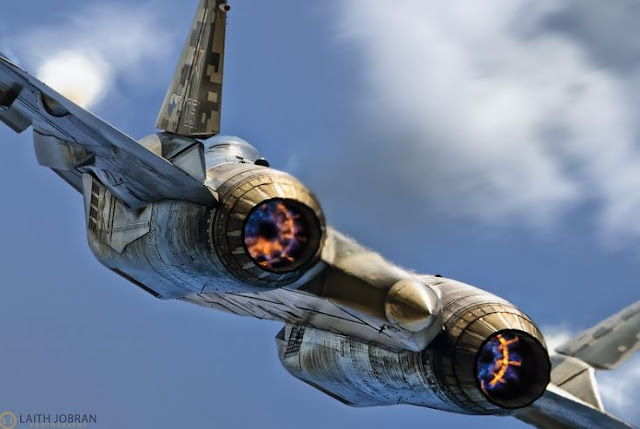
Super-Dry will be released: Su-57 fighter awaits modernization | Articles | News
Translated by google
Plans for updating the fifth-generation Russian aircraft formed even before its adoption
June 26, 2020
Anton Lavrov Roman Kretsul
Super-Dry will take off in two years. Tests of the first modernized fifth-generation fighter will begin in the summer of 2022. Officially, the product is called "Su-57 of the second stage." But among the military and aircraft manufacturers, the car received the nickname "Super-Dry." In addition to a completely new engine, the aircraft will be equipped with a package of modern avionics and airborne systems. They plan to complete the development work at the end of 2024, which will enable the transition to the release of an improved modification of the fighter. The phased implementation of improvements in the design of complex weapons such as modern combat aircraft has become common practice in Russia and abroad, experts say.
In the framework of the Megapolis
A large-scale upgrade has already been planned for the Su-57 that has not yet been adopted for service. The Ministry of Defense agreed on the timing and terms of reference for the updated “second stage” fighter, sources in the military-industrial complex told Izvestia. The technical appearance of the modernized machine has already been determined; now the task of the industry is to produce it on time. The aircraft will significantly surpass the current version in combat capabilities, sources added.
The state contract for the development and development work (OKR) of Megapolis to create the Su-57 “second stage” was signed by the Ministry of Defense and PJSC Company Sukhoi on October 29, 2018. According to the statements of the deadlines for its execution (available to Izvestia), the flight of the prototype is planned for mid-2022, and OCD should be completed at the end of 2024.
At the beginning of June, Sukhoi Company PJSC signed an agreement within the framework of the Megapolis development center to evaluate the effectiveness of the upgraded Su-57s in solving combat missions. As Valery Gerasimov, chief of the General Staff of the Russian Armed Forces previously said, in 2019, fighters of this type were re-tested in Syria and successfully completed all the tasks.
"Product 30"
One of the most important components of the Su-57 Megapolis modernization project will be equipping the fighter with an engine with increased power. Now the machines are equipped with a temporary engine of the first stage AL-41F1. The new generation power plant under the designation “product 30” is being developed by the “UEC-Ufa Engine-Building Production Association”.
Earlier, representatives of the United Engine Corporation (UEC) said that the new engine has “breakthrough characteristics” and will make the Su-57 an even more advanced project. Among its advantages called increased thrust-to-weight ratio: it will allow to develop supersonic speed without the inclusion of afterburner. Also, the motor will have better operational characteristics, including an increased resource. Plasma ignition system will improve fuel combustion.
As part of the design work, about two dozen prototypes of the “Product 30” were manufactured for ground and air tests. At the beginning of this year, it became known that they were already being tested in a flying laboratory. The first photos of the take-off of the Su-57 with one manufactured experimental engine appeared in March this year. The characteristic gear shape of the nozzle with a controlled thrust vector noticeable on them should reduce the radar visibility of the fighter.
According to the Deputy Minister of Defense Alexei Krivoruchko, the Su-57 with serial “30 products” will begin to be purchased from the mid-2020s. Prior to this, several dozen aircraft will be released with AL-41F1 engines.
Currently being tested pre-production samples of the Su-57. The contract for the first batch of 76 production vehicles for the Russian Ministry of Defense was signed at the Army-2019 forum. It should be completed before the end of 2027. The conclusion of a major contract significantly reduced the cost of each aircraft individually.
Change, but not all
The Su-57 will be equipped with the most modern equipment, while fundamental changes in the design of the aircraft will not be made, I am sure honored test pilot Colonel Igor Malikov. In his opinion, the development of a new modification at the stage when the creation of the basic version of the fighter has not yet been completed, it is necessary that the manufacturer subsequently begin to produce a modernized aircraft without wasting time.
“This is a natural process,” an expert told Izvestia. - The same story was with the Su-34 - it took a long time to test. During this time, new electronics appeared, more compact elements, improved weapons systems. We can observe the same thing with the Americans - they have not yet completed their F-35s, but every year they make changes and develop new modifications of the aircraft.
As Izvestia previously wrote, one of the components of the modernization of the Su-57 will be the replacement of hydraulic actuators of control surfaces with electric motors. This should reduce its visibility for radars, increase maneuverability and increase survivability in the event of damage.
The developer of the original and modernized fighter, the Sukhoi company, also announced the conduct of several more ROCs as part of the creation of the Su-57 “second stage”.
These include the development of a panoramic aviation indicator, new multi-function screens and a wide-angle collimator sight - all this should increase the situational awareness of the pilots.
In addition, the upgraded version will expand the range of guided weapons of the aircraft. According to the military, the Su-57 is a multi-purpose machine, capable of not only fighting for air supremacy, but also delivering accurate attacks on ground and surface targets.
For the aircraft, several families of “smart” missiles and bombs are being developed that can be placed in internal compartments.
Russia will prepare the Su-57 for Africa
 |
| Sunson Guo |
The gust fighter is about to be delivered. Will the F-16 be able to compete? Commander-in-Chief: Leading J 20 and a half generations_Five generations
Translated by google
2020-06-19
It is said that it is the world of fifth-generation fighters, but we can't see the picture of the competition between fifth-generation fighters. After all, there are few countries that can produce fifth-generation fighters. Apart from China, the United States and Russia, there is no fourth one that can develop fifth-generation fighters. country! It's just that South Korea claims to be able to assemble a new generation of fighters by the end of this year, but this fighter is at best a fourth-generation half-fighter, and it is basically impossible to compare it with the few fifth-generation fighters now! However, the United States is still the most mature country for fifth-generation fighters, and the only country to serve two fifth-generation fighters. However, once the only one in the United States, it has now become a three-legged situation, and Su 57 is still not in service, accurate. In other words, Russia is not really a fifth-generation fighter country!
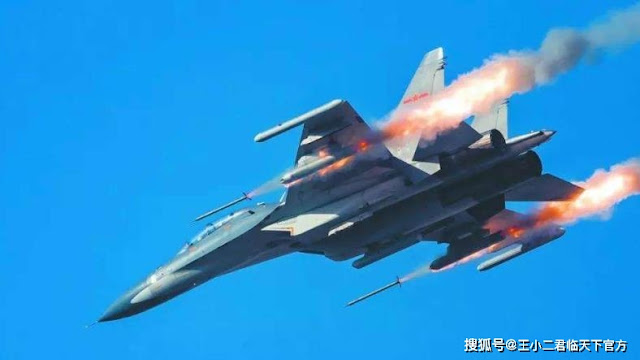
For India, it had high hopes for Su-57 from the beginning, but did not expect that this fighter has been in service for so many years, and it also disappointed India. India originally thought that it could get Russia's Su-57 earlier, so India has become a country with five generations of fighter jets, guaranteeing air superiority to its surroundings! However, after investing a lot of funds, India found that Su 57 was still not in service, so it decisively stopped the financial assistance, but the ships were all on board. How easy was it to want to quit? The early service of the J-20 made Russia very embarrassed. The current J-20 has been mass-produced and has all-weather combat capabilities. The distance that the Su 57 is being drawn is also getting larger and larger. For India, it is obviously unhappy. After all, I still hope that this fifth-generation fighter will guarantee air superiority. I have never thought that Russia has been off the chain. Now India can only hope on the gust fighter!

Whether it is the F-16 of the United States or the Su-30 of Russia, it is obviously not enough for India, and the upcoming delivery of gust fighters will make the fighters of the Indian Air Force increase! India purchased a total of 36 French gust fighters, which should be delivered in May, because the epidemic can only be delayed. The delivery time given by France is July. For India, once it has a gust fighter, it is bound to be Will become the backbone of the Indian Air Force! This fighter is one of the three most powerful fighters in Europe. It is a veritable fourth-generation half-fighter. In addition to several fifth-generation fighters, the strength of the gust fighter is still very powerful. India spent a lot of money to buy it. The powerful combat capability of the fighter!

For the J-16, it is obviously a veritable fourth-generation half-fighter, so can the J-16 contend with gust fighters? It should be known that the J-16 has an active phased array airborne fire control radar and advanced avionics system, which makes the electronic equipment of the J-16 close to the fifth generation fighter, and the J-16 uses the latest generation of aviation weapon systems. , Including "Thunderbolt-10" short-range air-to-air missiles, "Thunderbolt" -15 medium and long-range air-to-air missiles, can completely shoot down gust fighters beyond the line of sight! The radar antenna used by the Rafale has a limited area, and this defect is difficult to compensate even with the new active phased array radar. Therefore, it is more disadvantageous when it encounters opponents such as the J-16, and it carries the "Mika". The range of the air-to-air missile is only close to half of the "Thunderbolt" -15, so in air combat, it will only be preempted by the J-16! Both fighters are the leaders of the four and a half generations of fighters, and they have the power of one battle. There is no situation where one side crushes the other, but the F-16 is enough to resist the gust fighter!

India is also full of expectations for the delivery of gust fighters! The former Indian Air Force Commander Danoa told the media that although the gust fighter is expensive, it can at least guarantee the advantage of a half-generation ahead of the fighters in the surrounding area. The implication is that even the J-20 will lag the half-generation of the gust fighter. It is suspected that the fighters are advertising. After all, the two fighters are not at the same level. The J-20 obviously has a generational advantage. The Indian commander’s so-called leading generation of surrounding fighters is just a joke. After all, who is ahead is clear!


