Thursday, 17 February 2022

Deliveries of upgraded RSAF F-16 fighters have started, F-35s on track: Air Force chief

Norman Graf


Deliveries of upgraded RSAF F-16 fighters have started, F-35s on track: Air Force chief | The Straits Times

Lim Min Zhang
Assistant News Editor

SINGAPORE - Deliveries for the Republic of Singapore Air Force's (RSAF's) upgraded F-16s have started since June last year and the fighter jets will be good for at least another decade, even as the acquisition of the next-generation F-35s remains on track.

The Chief of Air Force, Major-General Kelvin Khong, gave this update on the RSAF's fighter fleet in a written interview on Monday (Feb 14) ahead of the Singapore Airshow, which runs from Tuesday (Feb 15) to Friday (Feb 18).

New capabilities of the upgraded F-16s include an extended range for threat detection and engagement. The cockpit has also been enhanced with an additional new display, improving battle space awareness.

MG Khong said subsequent deliveries of the upgraded jet will be rolled out progressively. The F-16 entered service in 1998 and faces obsolescence beyond 2030.

"We will continue to operate these fighter aircraft for at least another decade and are working towards replacing the F-16s at the end of their operational life," he said.

The F-16's replacement, the F-35 Joint Strike Fighter, remains projected to be delivered around 2026.

The Ministry of Defence had in 2019 announced the acquisition of four 'B' models of the F-35 that will be deployed in continental United States for training and evaluation.

Said MG Khong: "We have stringent and rigorous evaluation processes in place and have been following the developments of the F-35 closely. We will ensure that the F-35Bs meet our requirements before inducting them for operations."

The F-15SG multi-role fighter, meanwhile, remains a crucial component of the RSAF's fighter fleet in the next-generation SAF, said MG Khong. The first F-15SG was delivered in 2009.

He added that the air force will continue to evaluate the need for an upgrade to ensure the F-15SG's operational relevance and effectiveness.

In a wide-ranging interview, MG Khong addressed topics ranging from the impact of the Covid-19 pandemic, new operating concepts for drones, and the air force's sustainability efforts.

He said the RSAF has adapted to strict safe management measures at work places, and continued training overseas safely, such as in Australia, United States, and France.

When the pandemic hit, the RSAF reviewed its maintenance and logistics requirements and took steps to strengthen its supply chains, said MG Khong, who took over as air force chief in 2019.

This was aimed at increasing resilience against further global supply chain disruptions. "Thankfully, our hardware acquisitions and upgrades have remained largely on track."

Looking ahead, he said that the RSAF will continue to invest in conventional air combat capabilities while building capabilities to handle emerging threats.

Air combat will not be limited to the traditional fights between large formations of aircraft, he said. "Instead (it will) be about how well an air force can seamlessly integrate traditional air combat capabilities with technology across multiple domains to create a force multiplier effect."

Unmanned aerial vehicles will continue to play a crucial role in providing air intelligence, surveillance and reconnaissance capabilities for the Singapore Armed Forces, he said.

Smaller drones offer new options to meet SAF's operational requirements and enhances situational awareness in the battlefield when paired with larger ones.

He said this concept was validated during Exercise Forging Sabre last year, where the larger Heron 1 UAV and a smaller drone worked collaboratively to scan the battlefield from different altitudes.

"The results yielded were promising - from a higher altitude, the Heron 1 UAV provided a bird's eye view of the battlefield, while the smaller drone operated at a lower altitude to conduct in-depth surveillance of specific areas.

"We are keeping a close watch on such technology developments and will continue to study potential new concepts, inclusive of man-unmanned teaming to enhance the capabilities of the RSAF."


Korea Selects Boeing to Support Readiness for Three Critical Defense Platforms

Bruce Smith


Korea Selects Boeing to Support Readiness for Three Critical Defense Platforms - Feb 15, 2022

- Performance Based Logistics approach to ensure operational readiness, reduce cost on for F-15K, CH-47 and AEW&C fleets

SEOUL, South Korea, Feb. 15, 2022 /PRNewswire/ -- Boeing [NYSE: BA] has received three performance based logistics (PBL) contracts from the Republic of Korea's Defense Acquisition Program Administration (DAPA) to manage sustainment of Republic of Korea Air Force (ROKAF) F-15K fighter jets and Airborne Early Warning & Control (AEW&C) aircraft, and Republic of Korea Army (ROKA) CH-47 Chinook helicopters. The five-year contracts will improve aircraft availability by using performance data to inform logistics and supply chain management activities.  

"Our partnership with Korea is continuing to grow as we shift from transactional support approaches to customized models driven by agreed-to readiness outcomes," said Thom Breckenridge, senior director of Far East Programs for Boeing International Government & Defence. "These agreements enhance the value of PBL contracts that have delivered high mission-capable rates and improved parts forecasting and procurement of the ROKAF's F-15K fleet for more than a decade, and will extend benefits to the AEW&C and CH-47 fleets as well."

Boeing will execute the contracts in partnership with local industry, using its proven integrated logistics model to coordinate supply chain forecasting, procurement, delivery, maintenance training and risk-management practices in support of ROKAF and ROKA objectives. The PBL model will also improve the ability to adapt logistics quickly and cost effectively to support emergent issues and unanticipated events. In addition to executing the PBLs, Boeing will examine how data analytics can further improve the effectiveness of its PBL approach.

"Through the data they generate, these platforms are already telling us how to extend the life of parts and components, when to defer or elevate maintenance activities and how to focus training on actions that are most imminent," said Torbjorn Sjogren, vice president and general manager for Boeing International Government & Defence. "Applying data analytics to these PBLs is a very practical yet powerful way to maximize our customer's investment and support successful military operations in a critical region."  

For over 70 years, Boeing has enjoyed a strong and productive partnership with the Republic of Korea. Boeing is committed to supporting the growth of the Korean aerospace industry with a spend of over $5 billion in the past 15 years with local companies. As a reliable partner in the commercial aircraft and defense business sector, Boeing Korea continues to further strengthen its relationships with over 50 local industry partners, and employs more than 200 employees.

As a leading global aerospace company, Boeing develops, manufactures and services commercial airplanes, defense products and space systems for customers in more than 150 countries. As a top U.S. exporter, the company leverages the talents of a global supplier base to advance economic opportunity, sustainability and community impact. Boeing's diverse team is committed to innovating for the future and living the company's core values of safety, quality and integrity. Learn more at www.boeing.com.


F-15K Slam Eagle: Details
Boeing 737 AEW&C Wedgetail: Details

Wednesday, 16 February 2022

"Admiralty Shipyards" are preparing to lay down two submarines of project 677 "Lada" at once

St. Petersburg / Oleg Kuleshov @flickr


«Адмиралтейские верфи» готовят закладку сразу двух подводных лодок проекта 677 «Лада»

admship.ru

The shipbuilding enterprise "Admiralty Shipyards" has begun preparations for the laying of two diesel-electric submarines of project 677 "Lada" at once. According to the press service of the United Shipbuilding Corporation, the company has begun cutting metal for submarines.


According to the report, the third and fourth submarines of Project 677 will be laid down at the Admiralty Shipyards. No date has been announced yet. The submarines will be laid down under a contract signed back in 2019 as part of the Army-2019 forum. It is noted that both submarines will be built according to the modernized project 677, taking into account the trial operation of the head submarine of the St. Petersburg series.

In 2019, at the Admiralty Shipyards, speaking of a new contract for two Ladas, they announced that they would be built without VNEU and without Zircon missiles and would become part of the Navy in 2025-2027. It is unlikely that anything has changed in these almost three years, there is still no air-independent installation, and the hypersonic Zircon is still preparing to enter service only with surface ships.

Project 677 diesel-electric submarines belong to the fourth generation of non-nuclear submarines. It is designed to combat enemy submarines and surface ships, destroy its coastal facilities, lay minefields, and transport special forces units and cargo. Submarines "Lada" are armed with "Caliber-PL" complexes and six 533 mm torpedo tubes. Submarines of this project are characterized by a high degree of automation and low noise levels. Their surface displacement is about 1.8 thousand tons, the maximum underwater speed is 21 knots, and the immersion depth is up to 350 meters. Crew size - 35 people.

To date, the Navy has only one Project 677 submarine - the lead Lada, which became part of the Northern Fleet .


The first J-10C for Pakistan was spotted and as expected it is using the WS-10B Taihang engines

J-10C / chinamil.com / Photo by Wang Guoyun


@Rupprecht_A on Twitter: "After years of speculations and discussing that rumour it is finally confirmed! The first J-10C for Pakistan was spotted and as expected it is using the WS-10B Taihang engines. https://t.co/CTNJAPmMqV" / Twitter


Chengdu J-10A/B & C: Details

Tuesday, 15 February 2022

Boeing to Offer the P-8A Poseidon for Canada’s Multi-Mission Aircraft Project

Calum Reid


MediaRoom - News Releases/Statements

- Will include robust industry plan for long-term economic growth in Canada


OTTAWA, Ontario, Feb. 10, 2022 – Boeing [NYSE: BA] today announced its intent to offer the P-8A Poseidon in response to Canada’s Request for Information (RFI) for long-range maritime patrol aircraft. The Canadian Multi-Mission Aircraft (CMMA) project will replace the Royal Canadian Air Force fleet of CP-140 Aurora aircraft and enhance its anti-submarine warfare (ASW) and intelligence, surveillance and reconnaissance (ISR) capabilities.

With more than 140 aircraft in service, the P-8 has executed more than 400,000 mishap free flight-hours around the globe. Militaries that operate or have selected the P-8 include the U.S. Navy, the United Kingdom’s Royal Air Force, Royal Australian Air Force, Royal New Zealand Air Force, Indian Navy, Royal Norwegian Air Force, Republic of Korea Navy and German Navy.

“The P-8A Poseidon has demonstrated that it is the world’s most capable multi-mission aircraft currently in production and offers a complete solution for Canada’s CMMA requirements,” said Tim Flood, International Business Development director, Europe and Americas. “The range, speed, and endurance of the P-8 makes it the perfect platform to monitor Canada’s northern and maritime approaches and the P-8 will ensure allied interoperability to meet Canada’s security commitments. Coupled with a robust industrial partnership plan, Boeing’s offer will build on its successful record of contributing to Canada’s economic growth throughout the life of the CMMA program.”

The P-8A’s multi-mission capability has delivered mission success in ASW, ISR, humanitarian assistance and disaster relief and search and rescue missions. These multi-mission capabilities are enhanced through secure, interoperable, net-ready systems that will provide Canada with the ability to engage/control and to fully integrate with other ASW and ISR assets.

In addition, the P-8 shares extensive commonality with Boeing’s 737NG, which has support infrastructure around the globe. Commonality in spares and training for aircrews and maintainers reduces costs substantially and enables military operators to leverage support throughout the world. This proven aircraft and support infrastructure is the basis for delivering a rapid, low risk, low cost capability for Canada.

As a leading global aerospace company, Boeing develops, manufactures and services commercial airplanes, defense products and space systems for customers in more than 150 countries. As a top U.S. exporter, the company leverages the talents of a global supplier base to advance economic opportunity, sustainability and community impact. Boeing’s diverse team is committed to innovating for the future and living the company’s core values of safety, quality and integrity. Learn more at www.boeing.com

For more information on Boeing Defense, Space & Security, visit www.boeing.com. Follow us on Twitter: @BoeingDefense.

NAVAIR Public Release 2022-44 Distribution Statement A - Approved for public release; distribution is unlimited


P-8 Poseidon: Details

Monday, 14 February 2022

Finland set to sign deal with U.S. for 64 F-35 jets -sources

Airwolfhound


Finland set to sign deal with U.S. for 64 F-35 jets -sources | Reuters

By Mike Stone

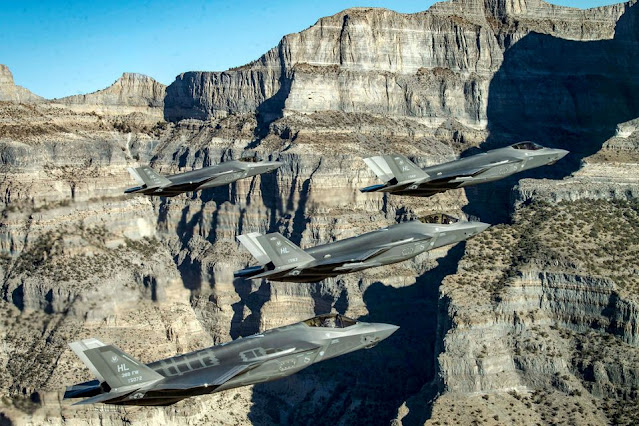
A formation of U.S. Air Force F-35 Lightning II fighter jets perform aerial maneuvers during as part of a combat power exercise over Utah Test and Training Range, Utah, U.S. November 19, 2018. Picture taken November 19, 2018. U.S. Air Force/Staff Sgt. Cory D. Payne/Handout via REUTERS.

WASHINGTON, Feb 10 (Reuters) - Finland's formal purchase agreement for F-35 fighter jets could be signed as soon as Friday, U.S.-based sources familiar with the plan said on Thursday, bringing the stealthy new planes one step closer to deploying in coming years on Russia's northern flank.

In December, Finland said it would replace its ageing F/A-18 combat jets with 64 F-35s planes and weapons systems in a deal $9.4 billion dollar deal. read more The deal is a foreign military sale through the U.S. government, but Lockheed Martin Corp (LMT.N) is the principal contractor for the jets.

"This is another clear sign of how serious Finland has always been about its national defense," Finland's ambassador to the United States, Mikko Hautala, said in a statement. Hautala said, "it is part of our long-term planning and has nothing to do with the current situation as such." He did not comment on any potential deal signing for the jets.

Russia, which shares a long border with Finland, has continued to mass troops near Ukraine. The standoff between Ukraine and Russia has prompted NATO to beef up the military presence on its own eastern flank.

Finland has no plans at present to join NATO, its foreign minister said in January. read more Still, Finland is buying NATO-compatible military equipment, which will allow for greater cooperation.

Finland, which shares a difficult history with Russia after the two clashed during World War Two, has long maintained the door to NATO open, saying it has the right to apply for membership if it so chooses.

Three people familiar with the situation who spoke on condition of anonymity said that as early as Friday Finland could sign the paperwork formalizing the jet deal and that production can begin. Finland ran a multi-year competition to replace its fleet of F-18s.

The U.S. State Department declined to comment.

Finland will begin to phase in the F-35 jets in 2027, the government has said.

Reporting by Mike Stone in Washington; Editing by David Gregorio and Sandra Maler


The American publication explained the purchase by Indonesia five times more expensive F-15 instead of Russian Su-35

F-15EX / Alejandro Peña


The Indonesian Air Force preferred American F-15 fighters to Russian Su-35s, on February 11, Jakarta signed a contract for the purchase of 36 US-made heavy fighters. As Military Watch writes, the choice of the F-15 over the Su-35 is by no means due to the combat qualities of American fighters.


The $13.9 billion contract for 36 F-15 fighter jets puts Indonesia among the seven countries that have already purchased the fighter, apart from the US of course. The Indonesian Air Force has been operating both light and heavy fighters for a long time, with heavy Su-27s and Su-30s, supplemented by light F-16s, at the heart of its air fleet.

It would seem that it is more profitable for Jakarta to purchase Russian Su-35 fighters, which are a further development of the same Su-27 and Su-30, especially since the Russian Su-35 and the American F-15 in the modern configuration are almost equal in strength. According to the newspaper, the new version of the F-15EX has avionics, sensors and data links equal to or even superior to the Su-35. At the same time, the Russian fighter has more powerful engines with thrust vector control, more long-range weapons and triple radars capable of detecting even stealth fighters. In the event of a mid-air collision, the Russian Su-35 will have a slight advantage over the F-15EX.

The fact that the Indonesian Air Force has the technical capabilities to maintain the Su-35 also spoke in favor of the Russian fighter, since they operated the Su-27 and Su-30 for a long time. In addition, the difference in the cost of aircraft also speaks in favor of the Russian fighter. If the American F-15 will cost Indonesia $386 million, then the Russian F-15 will cost only $78 million and Jakarta could buy a much larger number of aircraft for almost $14 billion. Also, Russia did not limit the use of its fighters, while the United States set certain operating conditions for the F-15.

However, despite all the benefits from the deal with Russia for the purchase of the Su-35, Indonesia still chose the "five times more expensive" American F-15 fighter. And the reason for this was Washington's economic pressure on Jakarta.

(...) comparing the costs of acquiring two fighters is an important example (...) of the power the United States has in threatening economic sanctions to effectively force Indonesia to abandon the Su-35 in favor of a largely equivalent fighter at five times the price

- sums up the publication.


Su-35S Flanker-E: Details
F-15E / Advanced F-15 (2040c) Eagle: Details