Friday, 2 March 2018

Beriev company delivered another modernizated Tu-95MC strategic bomber to the RuAF


Beriev company delivered another Tu-95MC strategic bomber to the #RuAFssian after its modernization. Source: UAC_Russia

Tu-95MS Strategic Bomber: Details

India Army to get 6 Apache attack helicopters

Apache AH-64


Army gets closer to buying Apache attack choppers


India’s defence acquisition council green lighted the proposal to buy six Apache AH-64E attack helicopters from the US last August. The helicopters and associated equipment are expected to cost around Rs 4,168 crore.

INDIA Updated: Feb 25, 2018 07:22 IST

The army is inching closer towards its goal of deploying attack helicopters for the first time, with India issuing a Letter of Request (LoR) to the US government for buying Boeing-made Apache choppers, a person closely monitoring the project said.

The LoR is a significant step as it formally kicks off the foreign military sales programme, Washington’s government-to-government method for selling US-built platforms. “The LoR was issued recently and now the US has to respond with a Letter of Acceptance (LoA) to take the Apache deal forward,” said the person quoted above. The LoA could come in six months after which the two sides will begin negotiations to hammer out a deal.

India’s defence acquisition council green lighted the proposal to buy six Apache AH-64E attack helicopters from the US last August. The helicopters and associated equipment are expected to cost around Rs 4,168 crore.

Armed with fire-and-forget Hellfire missiles, an Apache can track up to 128 targets a minute and prioritise threats. The missiles equip the gunships with heavy anti-armour capabilities.

India placed orders worth $3.1 billion for 22 Apache helicopters and 15 Chinook heavy-lift choppers in 2015 for its air force. These machines will start arriving in the middle of 2019, changing the complexion of the Indian Air Force’s helicopter fleet that consists mainly of Russian platforms. The six Apaches cleared by the council are being bought as a follow-on option to the 2015 contract.

India will be the 14th country to operate the attack helicopters and Boeing has delivered more than 2,200 Apaches to international customers. Attack helicopters have been on the army’s wish list for several years, but the IAF has objected to the plan. The army has a requirement for more attack helicopters as it had moved a case to buy 39 Apaches three years ago.

Since 2008, India has bought or ordered military equipment worth $15 billion from the US, including C-130J special operations planes, C-17 transport aircraft, P-8I submarine hunter planes, Harpoon missiles, helicopters and M777 howitzers.

India spent more than $100 billion on buying new weapons and systems during 2008-17, with imports accounting for around 60-65% of the country’s military requirements. At $15 billion, military purchases from the US have consumed more than a fourth of the total capital expenditure for the last decade.

Original post:  hindustantimes.com

Ah-64 Apache: Detials

Russian Mach 10 hypersonic air-to-surface missile "Kinzhal" (Dagger) Kh-47M2 - Video


The missile reported speed exceeding the speed of sound ten times it can maneuver during the flight path. This allows the missile to overcome all existing and prospective air defense and missile defense systems, delivering nuclear and conventional warheads to a target with a range of more than 2,000 km.


Russian Military Industry
Published on Mar 1, 2018


Mikoyan MiG-31: Details

Thursday, 1 March 2018

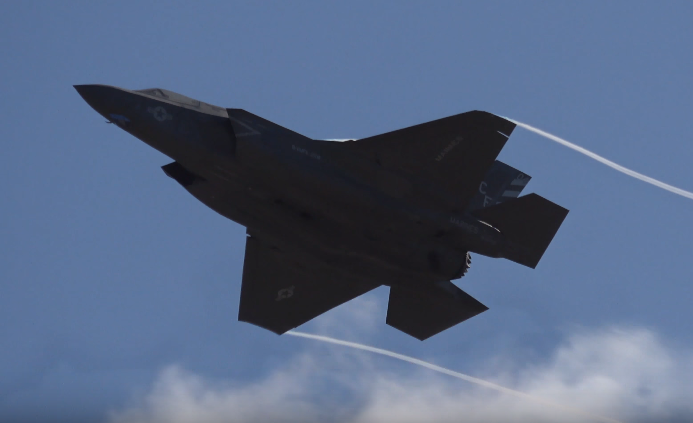
Turkey to get F-35 jets within a year


Turkey will take delivery of the first of its F-35 fighter jets within a year, according to Turkish daily Yeni Şafak.  

Turkey has placed orders for 30 of the advanced fighter jets, and intends to order 70 more.

The profits of Turkish firms participating in the joint Strike Fighter (JSF) project, which involves 10 countries and produces various versions of the F-35, are expected to reach $12 billion, says Yeni Şafak.

However, the JSF project has been plagued by delays stemming from technical issues. Turkish involvement has also been threatened by last year's Turkish purchase of the Russian S-400 missile system. This has upset Turkey’s NATO allies, who fear Russia may gain access to U.S. technology used by Turkey.

Last November, U.S. deputy undersecretary of the Air Force for international affairs Heidi Grant said that Turkey’s purchase of the Russian missile system could have consequences for its involvement in the manufacture of F-35 stealth fighter plane fuselages and servicing of the aircraft. 

Original post:  ahvalnews.com

Related article:
US Must Halt F-35 Sales to Turkey Over ‘Dangerous’ Provocations
Objections to giving Turkey F-35s
Dem Legislator Wants To Stop F-35 Sales To Turkey, Cites Embassy Skirmish


F-35 Lightning II: Details

Russian defense manufacturer to wrap up initial tests for T-14 Armata tank in 2018


The Russian Defense Ministry intends to purchase around 100 tanks by 2020

MOSCOW, February 22. /TASS/. Uralvagonzavod (part of the Rostec corporation) will complete initial tests for the T-14 Armata tank in 2018, Rostec CEO Sergey Chemezov told TASS.

"This year, we are concluding the initial tests of the tank, which will be followed by operational testing," he said.

The corporation’s head reiterated that the Russian Defense Ministry intended to purchase around 100 T-14s by 2020.

Russian Deputy Defense Minister Yury Borisov said earlier that the Defense Ministry would make a decision after 2020 on awarding major contracts to supply Armata tanks to the army.

The T-14 tank designed on the Armata platform was first unveiled in Moscow on May 9, 2015. The new fighting vehicle was outfitted with an unmanned turret and an isolated armored capsule for its crew for the very first time.

Original post:  tass.com

Related articles:
Serial production of Armata tanks to begin in 2020

Aussie Air Force experiencing oxygen issues in Super Hornets

Royal Australian Air Force F/A-18F Super Hornet


By: Mark D. Faram

The Royal Australian Air Force has confirmed that its aircrews have experienced the same type of physiological episodes as U.S. Navy crews while flying the F/A-18F Super Hornet and EA-18G Growler, Defence Connect reported.

“Physiological episodes are caused by complex interactions between human physiology and the aircraft breathing air system,” a statement from the Australian website read.

“The problem is extremely complex as contaminants can be generated by a number of sources both within and external to the aircraft. Investigations led by the US Navy continue to develop a detailed understanding of this problem.”

The Australian Defence Force said it is exercising a risk management plan for both the Super Hornets and Growlers and is taking action on their own, while continuing to work with the U.S. Navy, to find solutions to the problematic breathing episodes by tweaking their onboard systems.

As part of that effort, an Australian engineer is now a full-time member of the U.S. Navy Root Cause and Corrective Action Integrated Project team, headed by Rear Adm. Sara Joyner.

Joyner testified in front of a special hearing about the oxygen issues on Feb. 6, and told lawmakers that the Australians, as well as the Swiss, are now flying with monitors in their Hornet aircraft to help the Navy gather data.

But lawmakers are clearly getting frustrated with the lack of answers.

“At some point, paying $69 million for an aircraft we know has serious problems with its life support system has to be questioned,” said Rep. Niki Tsongas (D-MA) during the Feb. 8 hearing.

“I’m not calling for stopping production, but it seems clear that the Navy and Boeing need to work together and come up with improvements to the F/A-18 that make them safer for our brave men and women in the military to operate...and to make sure every single new F/A-18 has those improvements built in from day one and we’re not back here a good number of years hence revisiting these same problems yet again.”

Original post:  navytimes.com

Related articles:
Australia and US sign Next Generation Jammer development MOU
Harris electronic counter-measure system for U.S., Australia
Australia wants to buy anti-radiation missiles worth $183.7 million for its F-18G

F/A-18E/F & Block III Super Hornet: Details
EA-18G Growler: Details

Plasan Signed a Contract With BAE Systems for the Armouring of Type 26 Combat Ships

The new Type 26 ‘Global Combat Ship’ designed and built by BAE Systems for the UK Royal Navy armoured by Plasan (PRNewsfoto/Plasan Sasa)


KIBBUTZ SASA, Israel, February 28, 2018 /PRNewswire/ -- Plasan is very pleased to announce that they have signed a contract with BAE Systems, for the armouring of Type 26 Global Combat Ships for the UK Royal Navy.

Armour production for the first three ships is anticipated to begin in 2018. The ships will be built in Scotland at BAE Systems facilities in Glasgow and are considered the most advanced of their type in the world.

The new Type 26 'Global Combat Ship' designed and built by BAE Systems is the new class selected for the replacement of eight anti-submarine frigates of the Duke class currently in service with the Royal Navy.

The Type 26 will provide increased capability and flexibility through innovative design that includes a multi role mission bay, large flight deck and hangar that will be able to exploit a range of manned and unmanned systems.  There will also be great scope for future development.  

Plasan's world leading armour technology, flexibility and innovation is well suited to the Type 26 approach and has helped to secure this important programme.  The quality and production processes within Plasan underpin the confidence that has been shown in selecting Plasan's solution.  Working together with Design Authority partners has strengthened the ethos of Plasan's success.

Original post: prnewswire.co.uk

Type 26 Global Combat Ship (City-class): Details