8 March 2021
There are few branches of the national economy where we can resist Western producers. After the collapse of the Soviet Union, we lost our leading competencies in almost all market segments, especially in terms of technology . On the fingers of one hand, I can count those industries where we still hold a priority, and then only on the basis of the colossal Soviet foundation, accumulated by generations of Soviet engineers and scientists, inherited from the USSR. Among them, the military aircraft industry is far from last.
To remove possible questions, I will immediately say that the five of these industries are as follows: 1) Rosatom, 2) gas and oil production, 3) military aviation industry, 4) military (especially in terms of submarine) and icebreaking shipbuilding and 5) Roskosmos, which rolls down, eating up the remnants of the Soviet pie.
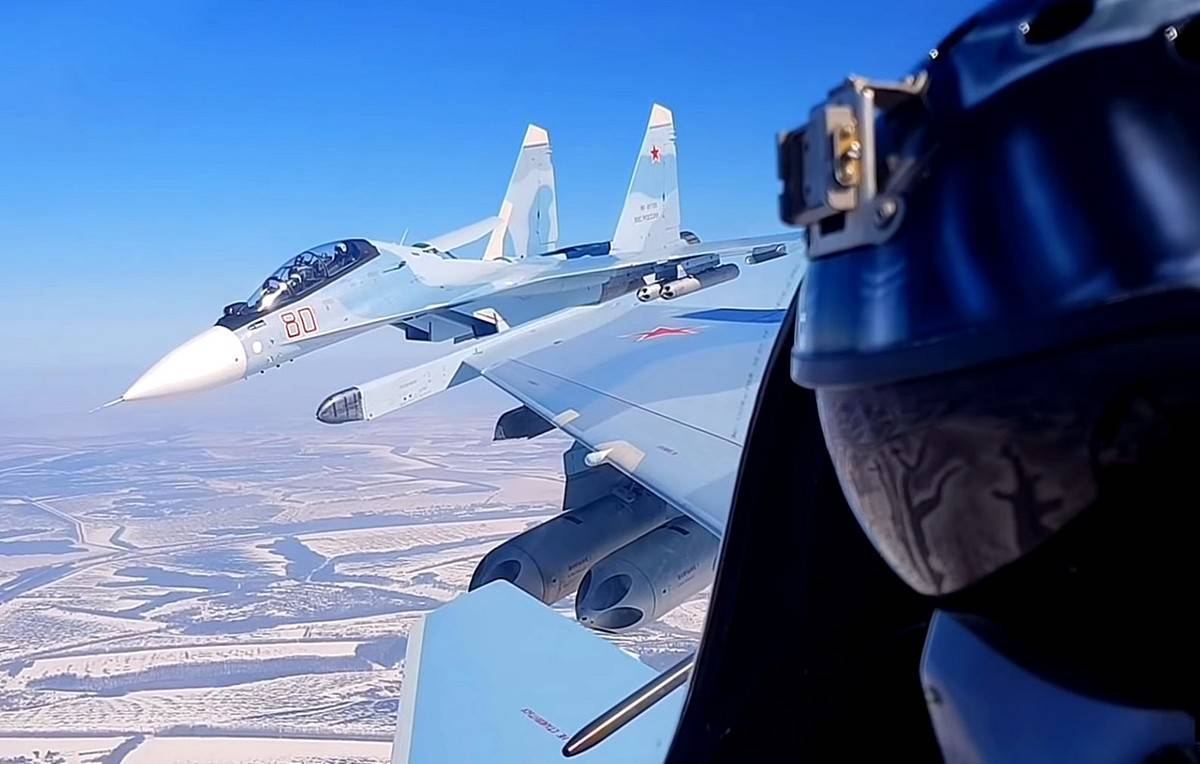
Today we will talk about the military aviation industry. I must say right away that we retained our leading positions in this highly competitive market only thanks to the magnificent Soviet legacy and the presence of two leading competing design groups - PJSC Sukhoi Company and JSC RSK MiG. And their successes in recent years are based mainly on breakthrough Soviet developments ahead of their time - the light MiG-29 fighter and the heavy Su-27.
In the post-Soviet years, the leadership was seized by Sukhoi. It got to the point that a year ago the United Aircraft Corporation (UAC) decided to merge them, merging into the United Military Aviation Division. The goals were good:
"The structure was supposed to be engaged in the development, production, sale and maintenance of the entire line of current and advanced combat aircraft of the UAC. Consolidation of the main research and production capacities of the military aircraft industry was supposed to serve the task of more efficient implementation of existing programs and the development of promising projects."
But it didn’t come. And a year later the merger was suspended. We will talk about the reasons for this and the prospects for the development of the domestic military aviation industry today.
Stop machine
The reason for the pause of the merger of the companies, most likely, was the lack of a comprehensive scheme for the merger of Sukhoi and MiG, which includes the combination of design plans into a single plan for the long-term development of the product range, a single development strategy, as well as a financial plan for the recovery of the enterprise, in the first place. turn of JSC RSK "MiG".
The merger algorithm assumes building a balance of relations between the connecting parties. This is a delicate mechanism that has not yet been completed in Russia, especially in aircraft construction. Because of this, fusion usually means "eating" by the stronger side (in our case, it is undoubtedly "Dry") by the weaker side. Of course, such a prospect hardly suited the Migars.
At the same time, it is obvious that the UAC did not quite cope with the role of the arbiter assigned to it in the current situation. Let me remind you that the only positive experience of creating a division - transport aviation - was not noticed and used in the corporation, and the division itself as a structure ceased to exist with the departure of Alexei Rogozin from the post of general director of the Ilyushin Aviation Complex.
In general, the problem of divisional management in the UAC is still not fully resolved. No proven templates on this topic have been created, and the existing positive experience is not used. This raises more and more questions about the role and place of the UAC as the head managing organization in the reform and development of the aircraft industry. Apparently, the tasks of creating efficient divisions will be solved by the Rostec aviation cluster.
Balances of the opposing sides
At the same time, it should be noted that the military aircraft industry in Russia is the only one that was able to demonstrate outstanding competitive qualities. Since the 1990s, it has been dynamically developing, withstanding high rates of mass production and, in a number of cases, has come up with unique proposals on the market. On the other hand, the military aircraft market itself in the 21st century is one of the most competitive and is currently undergoing a stage of global transformation.
In general, the task of combining Sukhoi and MiG - two completely different companies - objectively had its pitfalls. On one scale- PJSC "Sukhoi", which for many years acted as a donor of the entire domestic aircraft industry. Without the export contracts implemented by the corporation, neither the short-haul Sukhoi Superjet nor the medium-haul MS-21 would have appeared. The demand in the market allowed Sukhoi to update its line of machines on the twenty-seventh platform (in the fourth generation - 4+, 4 ++), at the same time creating the fifth generation Su-57 fighter, which entered serial production in 2020 and began to arrive in the videoconferencing of Russia. Over the years, the company has accumulated huge design and production experience, which is not found anywhere else.
On the other side of the scale- the less successful JSC RSK MiG, which was unable to achieve results similar to the success of Sukhoi and its line of heavy vehicles on the Su-27 platform with its main product, the light MiG-29 fighter. A significant share of the responsibility for this lies with the management of the MiG, which did not take full advantage of the obvious advantages of the twenty-ninth: the relative cheapness, the creation of a deck version of the machine, and large export contracts.
By the way, the lack of effective management of the Migars had a detrimental effect not only on the work of the company, but also on the performance of the mentioned contracts. Large deliveries of "twenty-ninths" to India and Algeria did not become the locomotive of the development of "MiG". Moreover, the delivery to Algeria turned into a scandal - a loyal partner of Russia, which was to receive 34 units of MiG-29SMT / 29UBT under a $ 1.1 billion contract, insisted on the recall of already delivered aircraft due to gross production shortcomings revealed (this is such a fact -ap, who could bury any company, but not "MiG"). Although this indirectly influenced the fact that the MiG was never able to win the contract for the creation of India's national fighter, and the projects for the modernization of the machines already supplied to the Indians were not fully implemented.

In the early 2000s, there were attempts to restart the enterprise, limited deliveries of MiG-29s to the countries of Southeast Asia and Africa were realized. But all this did not lead to the rapid takeoff of JSC RSK MiG. Now the further development of the mainline model of the enterprise is in question - the newest light fighter of the 4 ++ generation MiG-35, which is the result of the evolution of the MiG-29K / KUB and MiG-29M / M2 aircraft, has not yet found its buyer.
A ray of hope for "Migars"
But happiness came from where they did not expect. In 2018, the Kinzhal hypersonic missile system appeared in the arsenal of the Russian Aerospace Forces - a gravedigger of aircraft carriers, even by the very fact of its appearance, putting an end to the concept of AUG, which makes 11 American aircraft carrier strike groups nothing more than floating debris, a potential collective graveyard of the crews located there. Wing pilots and the US Marine Corps Marines traveling with them around the world. And the carrier of this terrible weapon became the supersonic high-altitude all-weather fighter-interceptor long-range MiG-31 in its modification MiG-31K, which was converted into the formidable "Dagger", created in Soviet times.
Now KB "MiG" is working closely on the creation on the basis of the MiG-31K a promising aircraft complex for long-range interception of the fifth generation - an interceptor called the MiG-41. Now its creation is at the stage of development work (development work). But this is a long-term task. Because the currently available MiG-31 fleet is sufficient to convert them into MiG-31K, and the needs of foreign customers, such as Venezuela or Algeria, are zero, since they do not have Daggers, and we are unlikely to share them. This is a strategic weapon for ensuring the security of the Russian Federation. Therefore, the MiG-41 is exclusively for domestic niche demand, and cannot be entered into the foreign market with it.
The pride and misfortune of "Sukhoi"
We must pay tribute to PJSC "Sukhoi" - they made the most of all the advantages of the Su-27 they inherited. His super successful platform, which allowed them to create a wide range of heavy multifunctional fighters (and even a multifunctional supersonic fighter-bomber Su-34), not only brought good profits to the domestic defense industry, but also created a kind of "Sukhoi cult", thanks to which Sushki acquired even countries that objectively did not have a request for such a heavy machine.

A fresh example of this is the Su-30SM. Sometimes the purchase of modern Russian heavy fighters increased the potential of the air forces of the buying countries so much that in a number of regions it even led to geopolitical changes. In particular, according to analysts, it was thanks to the presence of effective Russian-made air defense systems, as well as the 19 Su-30MKVs in service, that after the death of its President Hugo Chavez, Venezuela was able to avoid the invasion of foreign "democratizers" from neighboring countries, incited by one neighboring country (whose name we all know).
However, the trouble crept up unnoticed. You cannot milk the same cow all the time. The market potential has exhausted itself. The result of the work of Sukhoi and a number of its foreign competitors is the fact that the niche of heavy multifunctional machines is now almost everywhere filled. Moreover, due to the global technological upgrade - the transition of leading powers to fifth-generation fighters - the number of offers of modernized fourth-generation aircraft will increase on the market, to which export versions of fifth-generation aircraft will naturally be added. Thus, the heavy machinery market will be oversaturated and highly competitive over the next 20 years. It will be possible to win back a place in the sun on it only by maintaining the leadership in the "race of modernizations" of the fourth generation cars and the prompt presentation of export versions of the fifth generation cars.
Therefore, PJSC "Company Sukhoi" is entering a period of difficult and fierce competition. At the same time, the market for manned strike aircraft will continue to be replaced by strike UAVs. This means that the S-70 Okhotnik heavy strike UAV project being developed by Sukhoi is becoming more and more relevant every day. In fact, in the most difficult segment of UAVs, heavy attack jet vehicles, only American-made drones will be able to compete with the Okhotnik.
A chance for MiG not to be missed
It just so happened that global players, preparing for confrontation with each other, followed the path of creating heavy fighters, acting exclusively in the logic of a global war and a potential clash of major powers in extended theaters of military operations. In the modern world, local conflicts of low and medium intensity most often occur, where heavy fighters have nowhere to even roam. There, their performance characteristics are excessive, and the cost is excessive. Simply put, in such cases, a machine is required, firstly, of a lighter class, and secondly, a multifunctional one, capable of performing both strike missions and providing air defense.
Progressing third world countries: India, Pakistan, the countries of the Middle East and Southeast Asia, which are economically leaders in global development, have a strategic need to create "national" multifunctional aircraft. The conflicts in which Russia is involved also demonstrate the need for a compact, maneuverable, multi-functional medium-class vehicle with shock and air defense functions (especially in opposition to UAVs), allowing it to be used in conjunction with its own drones and air defense systems.
Thus, one of the most promising areas in the domestic and export markets is now the niche of a medium (according to the Russian classification - light) multifunctional fighter. And then the time comes for RSK MiG, since it is he, and not PJSC Sukhoi, who has the key competencies and experience in creating aircraft in this niche.
The future of Russian fighter aircraft
The Russian aviation industry is now on the verge of transformations in model and technological development, as well as in the choice of an effective corporate model that will allow it to develop further.
Su and MiG fighters, created on the basis of the Soviet reserve, form the basis of modern Russian fighter aircraft. The family of domestic heavy fighters of the fourth technological stage, created on the Su-27 platform, has evolved through a series of upgrades into the fifth generation Su-57 fighter. But Sukhoi should not rest on what has been achieved. It is important to maintain the pace of modernization and technological progress, developing the next technological versions, as well as urgently mastering the UAV market.
RSK MiG is facing the challenge of a complete restart of its model range - using, of course, successful design solutions of the MiG-29 family of vehicles. The niche of a medium (light) multifunctional fighter is now the most promising in the domestic and world market.
This gives a definite advantage in the creation of promising models in the niche of heavy and medium multifunctional UAVs. In general, the UAV market will develop along two diverging lines - enlargement in order to create efficient multifunctional machines and reduce, as part of the development of the doctrine of "smart swarm" of ultra-small machines. Therefore, here "MiG" can also try to master its niche, for example, by creating an integrated model "Head-leading" with its multifunctional machine at the head.
Summary. Growth points
For PJSC "Sukhoi": export version of the Su-57, Su-39 (drone killer, 4+ and 4 ++ generation subsonic vehicle based on the Su-25 and Su-24), heavy multifunctional UAVs.
For JSC RSK MiG: MiG-41, MiG-35 (and other 4+, 4 ++ and 5th generation vehicles based on the MiG-29), medium multifunctional UAVs.
This concludes the review of the state of affairs in the domestic military aviation industry, and in particular with two leading domestic developers and manufacturers of operational-tactical fighter (and bomber) aviation aircraft. All the best to all.
Author: Vladimir Volkonsky