Saturday, 27 March 2021

Contract to Upgrade F-16 Aircrafts

aviationphotodigest.com


CONTRACT TO UPGRADE SCRAPPED F-16 AIRCRAFT - KONGSBERG

Kongsberg Aviation Maintenance Services (KAMS) has contracted with the Norwegian Defence Material Agency to maintain and make ready for sale two F-16 aircraft that have been taken out of service in the Norwegian Armed Forces.

24 Mar 2021


The aircraft will be made ready for sale to new owners, and the Norwegian Defence Material Agency expects to achieve commercial re-sale agreements for the upgraded aircraft.

The contract initially applies to two F-16 aircraft that the Royal Norwegian Air Force has taken out of service, with an option to overhaul up to three additional aircraft. The work on the aircraft will take place at KAMS’ facilities at Kjeller, near Oslo, and if the option is exercised the last three aircraft are expected to be ready at the end of 2021. The aircraft will be returned to operating status and then maintained so that they are ready for service again. KAMS has 40 years of experience in maintaining, repairing and upgrading Norway’s F-16 fleet.

A considerable percentage of the entire F-16 fleet may potentially be relevant for repair and making ready for sale. This could result in considerable activity for KAMS at Kjeller. In addition, there will be good business opportunities for KAMS in connection with the maintenance of these aircraft for the new potential owners.

“The Norwegian Defence Material Agency is making efforts to achieve the best possible sales gain on the sale of F-16s. Several nations will be selling their F-16 aircraft in the near future. Our market surveys show it’s a good idea to create an attractive offer as regards the aircrafts’ quality and remaining flight time. This contract with KAMS gives us such an opportunity,” says Jonny M Otterlei, Technical Director at the Norwegian Defence Material Agency. “This contract also helps to maintain Norway’s industrial expertise in fighter aircraft maintenance.”


This is a very strategically important contract for KAMS that will ensure important aeronautical jobs in the years to come and that also represents an expansion of the strategic collaboration we’ve established with the Norwegian Armed Forces for the maintenance of aircraft materials. This may create growth and even more jobs in the future,” says Atle Wøllo, CEO of KAMS.


F-16C/D: Details

Second flight of Russia’s newest Il-112V light military transport plane due March 30

Sergey Pugachev


Russian Aviaton » Friday March 26, 2021 15:02 MSK

© United Aircraft Corporation

Russia’s Il-112V light military transport plane will make its second test flight from the Voronezh Aviation Plant’s airfield on March 30, an aircraft industry source has told TASS.

"Low-frequency tests of the plane were completed in late January 2021. The date of the second flight is March 30," the source said.

TASS has been unable to officially confirm the information at the time of the publication.

The Il-112V made its debut flight on March 30, 2019. The second flight was scheduled to take place in April 2020, but was postponed due to runway repairs, which have been completed by now.

#####


Friday, 26 March 2021

JSM successfully released from F-35A

Alan Wilson


JSM successfully released from F-35A

by Robin Hughes

The Norwegian Defence Materiel Agency (Forsvarsmateriell-FMA), in association with Kongsberg Defense & Aerospace (KDA), the Norwegian Defence Research Establishment (FFI) and the US Department of Defense F-35 Joint Program Office, in February conducted the first in-flight test release of a Joint Strike Missile (JSM) from the F-35A CTOL (Conventional Take-Off and Landing) Lightning II multirole stealth fighter over Edwards Air Force Base, California.

Disclosed on 20 March, the test, which was conducted using an instrumented JSM weapon integrated with the US Air Force (USAF) 412th Test Wing F-35A AF-01 instrumented test platform, was part of an ongoing programme to verify the integration and safe release of the weapon system from the Lightning II, beginning in 2020 with ground-release testing at Edwards AFB.

For the airborne release test, the AF-01 aircraft was furnished with three cameras inside the weapons bay and a separate camera pod, housing three additional cameras, mounted on the aircraft’s wing. “In order to be able to analyse exactly what is happening, both the aircraft and the JSM missile are marked with special photo marks that are accurately positioned on both aircraft and missiles. And from that, we can see through the videos exactly how the JSM missile behaves on its way out of the bomb chamber on the F-35A, said Royal Norwegian Air Force (RNoAF) Brigadier Jarle Nergård, head of the F-35 department at FMA. The test also included a two seat F-16 chase aircraft with a camera operator in the back seat recording the release and flight performance of the missile.

An instrumented JSM in the weapons bay of the F-35A AF-01 instrumented test platform prior to its first in-flight release over Edwards Air Force Base, California, in February (Norwegian Defence Materiel Agency)

Source janes.com

#####

Karsten Marrup


F-35 Lightning II: Details

Marshall ‘surprised' at speed of UK C-130 retirement, warns of job losses

RAF C-130J  / Bernie C


by Gareth Jennings

Marshall Aerospace and Defence Group (MADG) has expressed surprise at the speed at which the United Kingdom is to retire its fleet of Lockheed Martin C-130J/C-130J-30 Hercules transport aircraft, warning that the type’s premature axing could result in job losses at the maintenance, repair, and overhaul (MRO) company.

The UK currently fields 14 C-130J/C-130J-30 Hercules airlifters that will now be retired in 2023 rather than the earlier stated date of 2035. Marshall Aerospace and Defence Group, which supports the fleet, has expressed its surprise at the timescale and warned it may result in job losses. (Janes/Patrick Allen)

In a statement issued the day after the UK Defence Command Paper was published, the Cambridge-based MRO provider said that, while the retirement of the Royal Air Force’s (RAF’s) remaining fleet of 14 short-bodied C-130J C5 and long-bodied C-130J-30 C4 airlifters was anticipated, the decision to bring this forward from the planned out of service date (OSD) of 2035 to 2023 was not.

“There is no getting away from the fact that withdrawal by 2023 is disappointing news for Marshall, whilst we have enjoyed significant growth in our international C-130 business over recent years, our partnership with the RAF has remained the bedrock of our C-130 operation,” the MRO provider said on 23 March. “It is still too early for us to be able to assess the full impact this decision will have on our operations at Cambridge and Brize Norton, but we will do everything we can to protect as many jobs as possible but unfortunately we also have to be realistic at a time when the aviation industry is already under enormous pressure.”

Source janes.com


C-130J Hercules: Details

The J-10 fought against a Western fighter for the first time, but it was well prepared but unable to achieve a victory. The ace pilots collectively reflected on it

J-10B / chinamil.com.cn / Photo by Luo Rong


2021-03-18 11:58


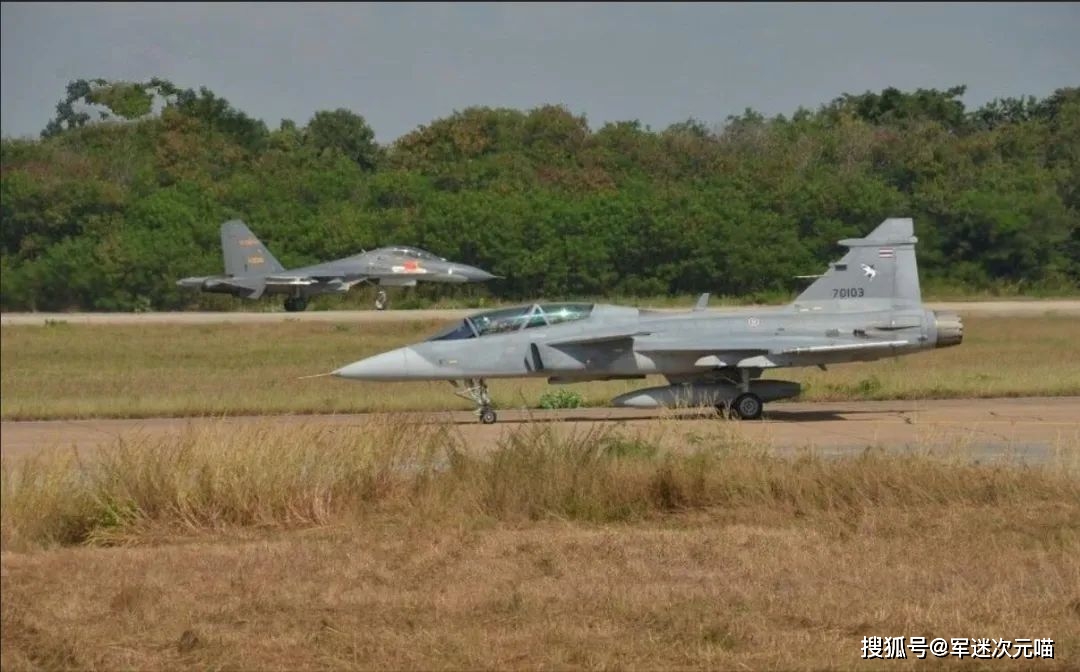
During the 2015 "Eagle Strike" joint air exercise, Su-27UBK and J-11A fighters conducted a series of discussions with the Royal Thai Air Force's 701 Squadron. Although they have achieved great victories in combat subjects, they have achieved great success in joint air defense and supervision. In the air combat link, the 701 Squadron relied on the avionics and data link advantages of the JAS-39 Gripen fighters to firmly suppress the Su-27 and J-11A fighters. Through this exercise, the Air Force also realized that it had not been modernized and upgraded. The early third-generation fighter jets of China are difficult to compete with the new-generation fighter jets of the West. However, through exercises in 2015, the Air Force also learned for the first time the performance and air combat tactics of Western fighters. In order to temper the troops, in the 2017 "Eagle Strike" joint exercises, the J-10A and J-10S fighters replaced the Su- 27 and J-11A, ready to fight against the Royal Thai Air Force’s JAS-39 Gripen fighters.


Since 2008, the Royal Thai Air Force has successively equipped 12 JAS-39C/D fighters. This fighter adopts a duck-type aerodynamic layout, has good short-range take-off and landing and maneuverability, and supersonic performance is also very good. According to the experience of fighting in 2015, the weaknesses of the JAS-39 fighter are mainly concentrated in vertical maneuvering and continuous hovering, and the energy decay speed is faster than that of the J-10, which also adopts the duck layout. The JAS-39C/D fighter uses the PS-05A flat-slot antenna radar developed by Ericsson, and is equipped with a MIL-STD-1553B data bus. Its performance is on par with the flat-slot antenna radar and GJB289A data bus of the J-10A equipment.


Compared with the Gripen fighter, the J-10A has better paper data. The engine thrust of the J-10A is greater (125 kN: 80 kN), and the take-off weight is greater (19 tons: 14 tons). The flight speed also has a slight advantage, and the pilots of the J-10A have gained experience feedback in 2015. This time it can be said that they are fully prepared. The J-10A has also repeatedly defeated the Su-27 and J-11A in exercises by relying on avionics advantages. Although 2017 was the first time that the J-10A played against a modern Western fighter, the confidence of the pilots was very sufficient.


However, according to the public information of the Royal Thai Air Force, during the 2017 joint exercise, the JAS-39 Gripen fighter performed well. It did not repeat the scene of the fiasco two years ago in the close combat subject, and although it did not in other subjects. It has achieved the same big victory as two years ago, but basically achieved a "five-five". The Royal Thai Air Force believes that compared with the Su-27 fighter, the performance of the J-10A is more balanced. In addition, Thai pilots have a better aerodynamic layout. The pros and cons are very well understood, so the fighting subject has the power to fight against the J-10A. The Thai media also interviewed the pilots of the J-10A. These ace pilots said they would reflect on them and try to win the next time.


In the joint exercise field in 2019, the more advanced J-10C began to play. In the face of the J-10C equipped with active phased array radar, the JAS-39 Gripen fighter was completely at a disadvantage, and it was no longer able to deal with the Soviet Union. Like the -27 fighter jets, requests are given in the over-the-horizon air combat link.


RTAF Jas Gripen C/D: Details
Chengdu J-10A/B & C: Details

Japan commissions 12th and final Soryu-class diesel-electric attack submarine

David's World 2011


by Kosuke Takahashi

The Japan Maritime Self-Defense Force (JMSDF) commissioned its 12th and final Soryu-class diesel-electric attack submarine (SSK) in a ceremony held on 24 March in Hyogo Prefecture in west-central Japan.

Named JS Toryu (with pennant number SS 512), the 84-m-long boat was inducted into the Escort Division 6 of Escort Flotilla 2, which is homeported at the Yokosuka naval base in Kanagawa Prefecture, shortly after being handed over by shipbuilder Kawasaki Heavy Industries (KHI) at its facility in Kobe.

It is the sixth submarine of the class built by KHI, with the other six having been constructed by Mitsubishi Heavy Industries (MHI). Toryu, which is also the second boat of the class to be equipped with lithium-ion batteries, was laid down in January 2017 and launched in November 2019.

The JMSDF commissioned Toryu , its 12th and final Soryu-class SSK, in a ceremony held on 24 March in Hyogo Prefecture in west-central Japan. (JMSDF)

The total procurement cost of the submarine was about JPY69 billion (USD635 million), a JMSDF spokesperson told Janes.

The commissioning comes after GS Yuasa, a Kyoto-based developer and manufacturer of battery systems, announced in February 2017 that Japan would become the first country in the world to equip SSKs with lithium-ion batteries in place of lead-acid batteries.

According to Janes Fighting Ships, the Soryu class has a beam of 9.1 m, a hull draught of 8.4 m, and a displacement of 2,947 tonnes when surfaced and of 4,100 tonnes when submerged.

The previous boats of the class have been fitted with two Kawasaki 12V 25/25 diesel generators and four Kawasaki Kockums V4-275R Stirling air-independent propulsion (AIP) engines, and use lead-acid batteries for energy storage.

Source janes.com


Soryu Class Submarines: Details

Thursday, 25 March 2021

Turkey's 'P-72 submarine hunters' duty

mavivatan.net


Türkiye'nin ‘denizaltı avcısı P-72' görev başında

The P-72, the most modern naval patrol aircraft of the Naval Forces Command, was imaged for the first time during the mission. TRT News accompanied the critical mission of the 'submarine hunter' P-72's experienced personnel in Mavi Vatan.

SCIENCE-TECHNOLOGY 
21 March 2021 Sunday 14:52 
Ibrahim Sarp


The Turkish Armed Forces continues to equip its experienced personnel with state-of-the-art warfare equipment. Submarine hunter P-72s, which recently entered the Naval Forces Command inventory, are one of them.

For the first time, TRT News team viewed the mission flight of the P-72 maritime patrol aircraft in the Blue Homeland.


INSTANT INFORMATION ON WATER WITH LINK 16 DATA SYSTEM

There are 8 personnel, 2 pilots and 1 tactical coordinator officer on the plane.

The P-72 provides instant information to naval and air force elements through the LINK 16 data system by drawing a picture of surface sea movement.

Experienced personnel do not miss any mobility under water as well as above water.

"WE WILL BE ONE OF THE LARGEST MARINE AIR FORCE IN THE MEDITERRANEAN AND OUR REGION"

Naval Air Fleet Commander Colonel Ahmet Özekin said:
"With our P-72 naval patrol aircraft entering the inventory, we will have about 12 maritime patrol aircraft by the end of the year. This will be one of the largest naval air forces in the entire Mediterranean and in our region. I can even say that we are the biggest.

We will be able to increase our strength in the Mediterranean, Aegean and Black Sea regions, which we call the Blue Homeland, by means of the airborne stay and range of these aircraft, even to the Middle Mediterranean and Western Mediterranean. "

CAN STAY IN THE AIR FOR 9 HOURS

Detected enemy submarine elements can be destroyed by the Mark 46 and Mark 54 torpedoes on the P-72.

The aircraft, which can stay in the air for up to 9 hours, can protect itself against electronic jamming and guided missiles.

It can be used in search and rescue activities in addition to all its tasks.

LOCAL COMPANIES ARE ALSO INCLUDED IN THE PRODUCTION

Many domestic defense industry companies such as TUSAŞ, HAVELSAN, ASELSAN and MİLSOFT take part as subcontractors in the production of P-72 maritime patrol aircraft.

Updated on: 21 March 2021, 16:07

#####


ATR 72 MP Maritime Patrol Aircraft: Details