Monday, 28 January 2019

VIDEO: Guided-Missile Destroyer USS Michael Monsoor Commissions

USNI News Video


VIDEO: Guided-Missile Destroyer USS Michael Monsoor Commissions


January 27, 2019 10:43 PM
The following is the Jan. 26, 2019 commissioning ceremony of the guided-missile destroyer USS Michael Monsoor (DG-1001) in San Diego, Calif.


Source: news.usni.org

USNI News Video
USNI News Video


Missile launch shows China’s DF-26 able to adjust position mid-flight, attack moving aircraft carriers

DF-26 - sina.com.cn


Missile launch shows China’s DF-26 able to adjust position mid-flight, attack moving aircraft carriers: expert


By Liu Xuanzun Source:Global Times 


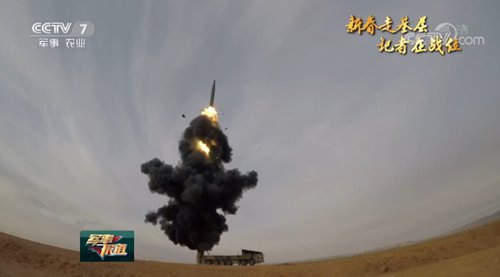
A DF-26 missile is pictured in a CCTV program. Photo: CCTV
A DF-26 missile during launch. Photo: CCTV


Close-up details of the Chinese anti-ship ballistic missile DF-26 show that the missile can greatly adjust its position mid-flight to accurately attack a moving aircraft carrier, experts said Sunday after China showcased the launch of its new-generation missile for the first time.

Western media frequently question the DF-26's ability to hit a moving vessel, saying China had never practiced attacking such a target. The recent exercise demonstrated the missile's capability, experts said.

People's Liberation Army (PLA) Rocket Force conducted a live-fire exercise in Northwest China featuring the launch of two DF-26 intermediate-range ballistic missiles, China Central Television (CCTV) reported on Thursday.

The nose of the missile has a double-cone structure with four fin-like flight control surfaces symmetrically built around the base of the warhead, the CCTV report shows.

This is the first time the launch of a DF-26 missile and detailed images of its appearance has been made public.

Song Zhongping, a military expert and TV commentator, told the Global Times on Sunday that the special design enables the missile to accurately control the attack trajectory, as the four flight control surfaces provide super maneuverability and guide the warhead during the terminal stage to hit a slow-moving aircraft carrier.

Song, who used to serve in the Second Artillery Corps (now the Rocket Force) of the PLA, said the double-cone structure provides the missile with increased targeting capability, speed, and stealth, making it more difficult to intercept.

"An information network connected to the warhead, which possibly includes satellites, ground and naval radar in addition to radar on the missile itself, will constantly update the location of a moving target, informing flight control where to guide the missile," a Beijing-based military expert who requested anonymity told the Global Times on Sunday.

Already in service with the PLA Rocket Force, the DF-26 can carry conventional or nuclear warheads and is capable of launching precision strikes on land targets or medium and large vessels at sea, said Chinese Ministry of National Defense spokesperson Wu Qian at a routine press conference in April 2018.

However, many foreign military experts and media doubted the missile's capability to fulfill its claimed role.

US media outlet CNN quoted Carl Schuster, a former US Navy captain, as saying in January that no military has ever successfully developed an anti-ship ballistic missile and using one would also require practice launches, which China has shown no evidence of having done.

The recent exercise is an example of practiced launches, said Song. 

The DF-26 is said to have an effective range of 4,500 kilometers, and could hit US naval bases in Guam in the western Pacific, china.com reported.

Source: www.globaltimes.cn

The launch of DF 26 IRBM
Web video_2
Published on Jan 24, 2019


China’s ship-killer ballistic missile DF-26 mobilized to Northwest China plateau after US warship trespassed into China's territorial waters
‘Guam Express’ DF-26 missiles in service with PLA

DF-26 intermediate-range missile: Details

Chinese warplane designer believe that they should learn from Su-57

Телеканал Звезда


China should learn from Su-57: experts


Source:Global Times

Although many Chinese military observers are pessimistic over Russia's latest fighter jet Su-57's capability, a senior Chinese warplane designer believes the Su-57 has a very unique concept, and China should learn from it despite the country already operating the J-20 fighter.

The Su-57, Russia's fifth-generation fighter jet comparable to China's J-20 and the US' F-22, is usually considered not a true fifth-generation jet because of its "below-standard" stealth capability, according to media reports. This makes it at a significant disadvantage against Chinese and US counterparts, some military observers said.

China has a long tradition of purchasing Russian warplanes, recently highlighted by an Su-35 deal. But as the country developed its own fifth- generation fighter jet, it does not need to buy or even learn from the "below-standard" Su-57.

However, Wang Yongqing, chief designer of the Shenyang Aircraft Design Institute (SADI) under the State-owned Aviation Industry Corporation of China (AVIC), said the Su-57's overall capability is not bad at all.

The SADI has developed a variety of China's fighter jets, including the J-11, J-15 and J-16. It is currently developing the FC-31 stealth fighter, which is made-for-export but was recently reported that it could become China's next-generation aircraft carrier-based warplane.

Having an innovative aerodynamic design and capable of thrust vectoring control, the Su-57 attaches strong importance to supersonic cruise capability and super-maneuverability, and stealth is intentionally a second priority, Wang wrote in  February in the Aerospace Knowledge magazine.

The US' concept of next-generation aerial battle stresses beyond visual range attacks, but missiles capable of delivering such attacks have to travel for a while, a time window far enough for the Su-57 to make super-maneuvers and evade them, Wang said, noting that the Russian fighter is also equipped with special radars designed to detect the precise location of incoming missiles.

With long-range missiles out of the question, the final showdown will eventually take place at close range, where stealth loses its meaning and super-maneuverability thrives, Wang said. 

Another unique design is the world's first side-facing radars in addition to the front-facing ones, Wang said. Combined with other radars and infrared sensors, the Su-57 is expected to find enemy stealth aircraft as early as possible.

Russia might be limited by its industrial capability and might not be able to rival the US aircraft in specific or overall performance, but its concept is very unique, Wang said.

Source: www.globaltimes.cn

Sukhoi Su-57: Details
Chengdu J-20: Details
F-22 Raptor: Details

Sunday, 27 January 2019

Russian Federation plans to lay the ‘Super Gorshkov’ project 22350M in the near future

Agat Concern


Translated by google


Navy of the Russian Federation in the near future plans to lay the frigate of the project 22350M - commander in chief


St. Petersburg. January 24th. INTERFAX-AVN - The Russian Navy intends to lay the frigate of project 22350M, series 22350 in the near future, will continue, commander-in-chief of the Navy Vladimir Korolev told reporters after a ceremony marking the 310th anniversary of the Central Naval Museum in St. Petersburg.

“This is our future. Definitely we will continue the series 22350 and in the near future we are laying a new frigate of the same type, but with a greater displacement of 22350M,” he said.

The commander did not specify where and when the bookmark will be made.

Project 22350 warships have a displacement of 5 thousand tons, length - 135 meters, width - 16 m, reach speeds of about 30 knots, cruising range - 4.5 thousand miles, autonomy - 30 days. The crew - about 200 people.

The ships are armed with a 130-mm artillery A-192, an anti-aircraft missile system "Polyment-Redut", 16 anti-ship missiles "Onyx" or "Caliber". The “Package” complex and the Ka-27 anti-submarine helicopter are intended to fight submarines.

Source: www.militarynews.ru


Project 22350 serial frigates carry 16 Caliber missiles, thus, the upgraded version will receive 24 cruise missiles of that type. The point is not a modification 22350M, but redesigning of the basic project 22350, emphasized the interviewee. Source: mil.today


Russia started development of new generation project 22350M frigate
Severnoye Design Bureau to Start Developing Project 22350M Frigates in 2018

China's tenth Type 052D Destroyer and Sixth Type 071 Landing Platform Dock were both commissioned with the PLAN

浩 汉 – 红 鲨 RedShark


China’s Tenth Type 052D Destroyer And Sixth Type 071 LPD Commissioned With The PLAN


Type 052D Destroyer "Hohhot" (呼和浩特 with pennant number 161) and Type 071 LPD "Wuzhishan" (五指山 with pennant number 987) both joined the PLAN South Sea Fleet on 12 January 2019

Xavier Vavasseur  24 Jan 2019

China's tenth Type 052D Destroyer (NATO reporting name: Luyang III class) and Sixth Type 071 Landing Platform Dock (NATO reporting name: Yuzhao class) were both commissioned with the People's Liberation Army Navy (PLAN or Chinese Navy) on 12 January 2019. Our colleagues from Eastpendulum reported that both vessels joined the PLAN South Sea Fleet.

China’s tenth Type 052D Destroyer (NATO reporting name: Luyang III class) and Sixth Type 071 Landing Platform Dock (NATO reporting name: Yuzhao class) were both commissioned with the People’s Liberation Army Navy (PLAN or Chinese Navy) on 12 January 2019. Our colleagues from East Pendulum reported that both vessels joined the PLAN South Sea Fleet.

“Hohhot” joined the 2nd Destroyer flotilla of the PLAN South Sea Fleet, 747 days after its launch at the Jiangnan Changxing Shipbuilding and Heavy Industry Corporation (Jiangnan-Changxing) in Shanghai (a member of China State Shipbuilding Corporation CSSC).

It is the 10th Type 052D Destroyer overall for the PLAN and the first for this unit, which deploys “older” generation destroyers such as the only Type 051B Destroyer which just completed its mid-life refit. The 2nd Destroyer flotilla also deploys both Type 052B built in the early 2000s’.

According to Eastpendulum, Chinese netizens used to nickname this flotilla the “Retirement Home”. With the commissioning of this first Type 052D (and more on the way) the nickname is likely to be dropped.

The Type 052D Kunming class (Nato designation: Luyang III) is one of the latest generation of guided-missile destroyer (DDG) of the Chinese Navy. It is based on its predecessor, the Type 052C DDG and likely shares the same hull. However the Type 052D incorporates many improvements in terms of design as well as sensors and weapons fit. This modern class of vessel is considered as the Chinese equivalent to the American AEGIS destroyers.

23 Type 052 Destroyers are alreadu operational with the PLAN or under construction. They are still being built by two shipyards: Jiangnan-Changxing shipyard and Dalian Shipbuilding Industry Company. The first vessel of the class, Kunming (hull number 172), was commissioned in March 2014.

The Type 052D Destroyer displaces 7,500 tons, has a length of 157 meters, a beam of 17 meters and a crew complement of 280 sailors.

Eastpendulum notes that with a duration of 747 days between the launch and commissioning, outfitting and sea trials of “Hohhot” were completed at a faster pace than for its Type 052D sister-ships. The average average for the class is around 857 days (about 2 years and 4 months). It was even longer (957 days) for “Changsha” the second ship in the class.


The commissioning ceremony of Type 052D Destroyer “Hohhot” and Type 071 LPD “Wuzhishan” in Zhanjiang (Photos: 浩 汉 – 红 鲨 RedShark


“Hohhot” was not the only surface vessel to be commissioned with the PLAN on January 12th. Wuzhishan (五指山) was commissioned with the PLAN’s 6th amphibious flotilla (belonging to the South Sea Fleet as well).

This 6th Type 071 was built by the Hudong-Zhonghua shipyard in Shanghai, as was the case for the first five Type 071 vessels. The LPD was launched on January 20, 2018.

Originally designed after the 1996 Taiwan Strait crisis, the Type 071 is 210 meters long and 28 meters wide. It is capable of carrying an 800 marines (1 battalion) and some 20 amphibious vehicles.

For amphibious warfare, the Type 071’s well deck may deploy at least two Type 726 / Type 726A, a Chinese LCAC of approximately 150 tonnes. Each LCAC is designed to deploy a battle tank (ZTZ-96A for example). The ship is also fitted with two large hangars and a flight deck, where two Z-8J helicopters can be operated simultaneously. The ship is fitted with one 76 mm gun and four 30 mm close-in weapon systems.

With the commissioning of “Wuzhishan”, the South Sea Fleet now has 4 large amphibious vessels which will significantly increase China’s ability to support its operations throughout the South China Sea, and beyond.

Source: navalnews.com


Type 52D - wikipedia.org

10th Type 052D Destroyer Hohhot/呼和浩特 (hull number 161) confirmed in active service
China honor Scientist who developed electric propulsion system for next-generation warships

Type 52D destroyer: Details


Type 071 - wikipedia.org


China commissioned fifth Type 071 LPD "Longhushan" (龙虎山 with hull number 980)

China’s new landing ship useful in island dispute: expert
China building fifth Yuzhao-class (Type 071) Landing Platform Dock (LPD)


Yuzhao Class (LPD) Type 071: Details

Saturday, 26 January 2019

Saab has submitted its proposal for the Swiss New Fighter Aircraft procurement


Saab Offers Gripen E to Switzerland


PRESS RELEASE

25 January 2019

Supported by Sweden, Saab has today submitted its proposal for the Swiss New Fighter Aircraft procurement to armasuisse, the Swiss defence procurement agency. Saab offers Gripen E and a comprehensive industrial participation programme for Swiss industry corresponding to 100 percent of the contract value.

The proposal consisting of options for 30, and 40, new build Gripen E fighter aircraft is a response to the Request for Proposal (RFP), which armasuisse issued 6 July 2018. Switzerland has a need to replace its fighter fleet of F/A-18 Hornet and F-5 E/F Tiger aircraft.

 “The proposed Gripen E solution features the latest available technology and low acquisition, operation and support costs that will give Switzerland an optimal fleet size, with the best total operational effect over the coming decades,” says Jonas Hjelm, head of Saab business area Aeronautics.

As part of the proposal to Switzerland, Saab offers Swiss industrial participation worth 100 percent of the contract value. The co-operation with Swiss industry, across all regions of the country, in manufacturing, maintenance and technology will improve competence and capabilities aimed at the sustainment and further development of the Gripen E system in Switzerland. Saab has a historical, strong and broad supplier base in Switzerland, which this programme will further expand to assure cost efficient through-life co-operation.

The Gripen E programme is progressing according to plan, with production on-going and customer deliveries starting this year. The very latest technologies are being incorporated to provide air forces with operational capabilities designed to defeat the threats of today, but also the future. Key milestones achieved during the past six months include flights with IRIS-T and METEOR, as well as the second Gripen E aircraft taking flight.

Five nations currently operate Gripen: Sweden, South Africa, Czech Republic, Hungary and Thailand. Sweden and Brazil have ordered Gripen E. Additionally, the UK Empire Test Pilots’ School (ETPS) uses Gripen as platform for test pilot training.

Source: saabgroup.com

Swiss to vote (again) on buying new jet fighters

Saab Gripen E/F: Details

Friday, 25 January 2019

Let’s Talk About Russia’s “Hunter” Next-Gen Unmanned Combat Air Vehicle Spotted On The Ground At Novosibirsk

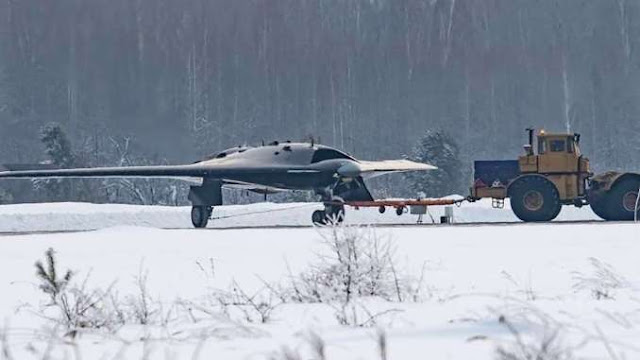
The new Russian "Hunter" remotely piloted aircraft appeared early this week on social media for the first time. (Photo: Via ВКС России on Facebook)


The New “Hunter” UCAV Might Work in Tandem with Su-57 Fighter.

New photos have surfaced on social media of the rumored Russian next-generation unmanned combat air vehicle (UCAV) tentatively called the “охотник” or “Hunter”, at the Novosibirsk Aircraft Production Organization (NAPO) in central Russia. The photos provide new clues about the status of Russia’s previously modest RPA (Remotely Piloted Aircraft) capability.

The same week the photos of the new “Hunter” drone appeared across Russian Twitter and Facebook accounts, photos of a Sukhoi Su-57 with unique camouflage plan view markings and new tail insignia also surfaced. The markings on the tail of the Su-57 (053 Blue) show the plan view shape of what appears to be the Hunter drone, along with an Su-57 next to it. The two shapes float above a lightning bolt silhouette in the background, suggesting some electronic relationship between the two aircraft.

Early this week new tail markings were shown on this Sukhoi Su-57 on Facebook. (Photo: Via ВКС России on Facebook)


The new pixelated camouflage on the underside of the aircraft mimics the plan view shape of the Hunter remotely piloted aircraft.


Speculation has surfaced that the Su-57 may be developing some capability to control or share data with this new remotely piloted aircraft. This concept may be similar to an idea proposed by the U.S. Air Force with the F-35A Lightning II. A future concept video released by the Air Force Research Lab on March 22, 2018, shows an animation of an F-35A flying with six unmanned aircraft. The concept is that the unmanned aircraft themselves manage their own basic flight control while the F-35A acts as a command and control hub to assign targets and select weapons for the unmanned aircraft to employ.

The idea is particularly relevant in a “first day of war” scenario when an F-35A could fly along the forward line of battle just outside the range of enemy air defenses and then vector the remotely piloted aircraft in toward heavily defended targets such as command and control networks and air defense sensors. These remotely piloted aircraft could then release stand-off weapons to destroy enemy command and control and air defense assets.......continue reading: HERE


deepbluehorizon.blogspot.com


Okhotnik

According to the defense official, the sixth generation jet program “has not yet taken full shape, its main features are already known.”

“First of all, it should be unmanned and capable of performing any combat task in an autonomous regime. In this sense, the stealth drone will become the prototype of the sixth generation fighter jet,’ the source said, adding that the drone will be able to “take off, fulfill its objectives and return to the airfield.”

“However, it will not receive the function of decision-making regarding the use of weapons – this will be decided by a human,” he said.

TASS notes, in the report, that they were not able to officially confirm the information provided by the defense official.

Another defense expert told TASS that the single-engine Okhotnik (“Hunter” in Russian) stealth drone has a top speed of roughly 621 mph (.809 Mach), and would start flight tests in the second half of this year.

“The Russian Defense Ministry and the Sukhoi Company signed a contract for developing the 20-ton Okhotnik (Hunter) heavy unmanned strike aircraft in 2011. The drone’s mock-up model was made in 2014. According to unconfirmed reports, composite materials and anti-radar coating were used to create the Okhotnik. The drone is equipped with a reaction-jet propulsion and is supposed to develop a speed of 1000 kilometers per hour,” said TASS. Source: zerohedge.com