Washington, May 9. The aviation part of the Moscow Victory Day parade made a strong impression on foreign Internet users.
The famous American military expert H. I. Sutton posted a report about the parade on Red Square on his Twitter page, PolitRussia presents his words and the most typical comments of his readers . The attention of US residents was attracted primarily by the Russian fifth-generation fighter Su-57, which flew over the Russian capital along with dozens of other combat aircraft and helicopters of the Russian Aerospace Forces.
“A beautiful plane. <…> Sukhoi's planes generally look deadly, "wrote H. I. Sutton himself.
Its readers agreed with the expert's opinion and acknowledged the threatening appearance of the Russian fighter, as well as the powerful sound of its engines. Netizens from the United States called for the modernized Russian army, navy and combat aviation to be taken seriously, noting their successful modernization over the years. The flight of the "deadly handsome" Su-57 over Moscow on the day of the Great Victory celebration became convincing evidence.
Earlier it was reported that the Russian fifth generation Su-57 fighters will be able to transmit information about the detected air targets to ground-based air defense systems.
TAIPEI (Taiwan News) — The Taiwan military has announced plans to resell its old F-16 radars, after its fighter fleet got new ones.
Taiwan's F-16 fighter jets are getting new AN/APG-83 AESA radars as part of their retrofit to the Block 70 variant. However, the old APG-66 radars are still usable and valuable in the international arms market, Liberty Times reported.
A person familiar with the matter pointed out these radars can be installed in F-16A/B fighters, which are still in service in foreign air forces. Once Taiwan completes retrofitting its jets, a batch of more than 100 APG-66 radars will be sold in accordance with U.S. regulations, with the profits to be handed over to the national treasury.
The individual said the value of the old radars is unknown at present. Taiwan purchased 150 F-16 fighters from the U.S. in 1992 and received them in 1997.
The AN/APG-83 features all-weather, high-resolution synthetic aperture radar mapping to present the pilot with a large surface image for more precise target identification and strike information, according to Northrup Grumman.
An F/A-18 flies with an Advanced Anti-Radiation Guided Missile – Extended Range (AARGM-ER) during a captive carry flight test at Patuxent River Air Station in Maryland. The Navy is integrating AARGM-ER on the F/A-18E/F and EA-18G, and will be compatible for integration of the F-35. U.S. NAVY
PATUXENT RIVER, Md. — The U.S. Navy completed an Advanced Anti-Radiation Guided Missile – Extended Range (AARGM-ER) captive carry flight on an F/A-18 Super Hornet April 22 at Patuxent River in support of the first live fire event this spring, the Naval Air Systems Command said in a May 7 release.
This flight marked the first time the AARGM-ER weapon demonstrated it could communicate with the F/A-18 E/F aircraft. The Separation Test Vehicle (STV) used its hardware and software to facilitate the controlled free flight.
“Data collected from this testing will support expansion of flight testing with AARGM-ER to the full performance envelope of F/A-18 Super Hornet,” said Capt. Mitch Commerford, program manager for Direct and Time Sensitive Strike program office (PMA-242). “This flight represents a significant step in the AARGM-ER engineering and manufacturing development phase.”
During the test, the F/A-18 Super Hornet conducted a series of aerial maneuvers in order to evaluate compatibility of the AARGM-ER with the F/A-18 Super Hornet. The test points completed during this flight test event substantiated F/A-18 carriage compatibility.
AARGM-ER is being integrated on the F/A-18E/F and EA-18G and will be compatible for integration of the F-35. By leveraging the U.S. Navy’s AARGM program that’s in full-rate production, the AARGM-ER, with a new rocket motor and warhead, will provide advanced capability to detect and engage enemy air defense systems.
Moscow. May 8. INTERFAX-AVN - A batch of modernized Su-25SM3 attack aircraft arrived in the Southern Military District in April, the Russian Defense Ministry said.
The first flights of the modernized aircraft will take place on May 13 from the Budennovsky airfield in the Stavropol Territory, the report said.
"During the first flights of the crews of the deeply modernized Su-25SM3 attack aircraft, which entered the aviation unit of the Southern Military District in April this year, the pilots will launch unguided rockets and bombardments at ground targets," the message says.
It says that at speeds from 300 to 800 km / h, pilots will work out complex aerobatics elements, such as vertical, horizontal and oblique "barrels", combat turn, Nesterov loop.
The Su-25, developed by the Sukhoi company (part of the United Aircraft Corporation, UAC), is designed to destroy small-sized mobile and stationary ground objects, as well as low-speed air targets.
Serially aircraft of this type were produced at two aircraft factories - in Ulan-Ude (combat training Su-25UB) and in Tbilisi (combat Su-25). In total, in 1981-1991, 1 thousand 320 copies of the Su-25 were built.
There are several versions of the modernized Su-25. The most advanced modification of the Rook attack aircraft is the Su-25SM3.
In 2018, an Interfax source reported that the entire fleet of ground attack aircraft of the Russian Aerospace Forces is planned to be upgraded to the Su-25SM3 version.
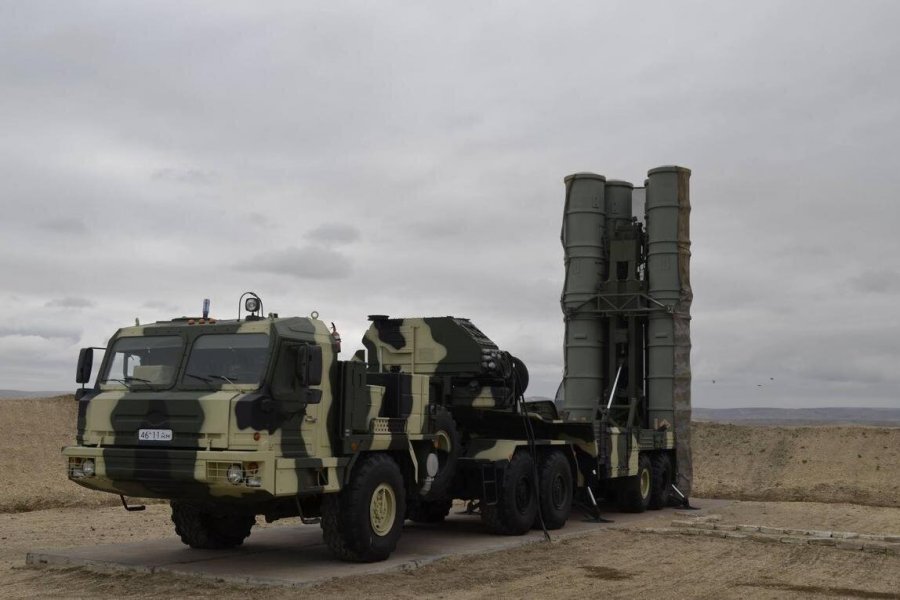
The Polish military aircraft made provocative maneuvers against the Belarusian S-300 air defense systems, as well as against the Russian S-400 air defense systems, which are deployed on the territory of Kaliningrad. A small Polish plane flew a few hundred meters from the S-400 and S-300, forcing them to activate and reveal their location, Avia.pro reports.
According to monitoring services, a small-sized light-engine military aircraft of the Polish Air Force flew in critical proximity to the Belarusian border, activating the S-300 air defense system. Considering that this zone is also under the control of the Russian S-400 air defense systems, it is assumed that the provocation was also directed against the most powerful Russian Triumph complexes, which are located in the Kaliningrad region.
Experts suggest that such a flight of a Polish military aircraft was not at all accidental - after all, by activating radio and electronic reconnaissance means, the Polish military could track the location of the indicated air defense. It is known that this is not the first case of provocation by Poland - in April, two more flights of Polish Air Force aircraft were recorded in violation of the airspace of Belarus.
Author of the text: Information Agency "Informing",
The British Army will receive a fleet of 148 Challenger 3 main battle tanks as part of an £800 million contract with Rheinmetall BAE Systems Land (RBSL), the Defence Secretary has announced today.
From:Ministry of Defence, Defence Equipment and Support, and The Rt Hon Ben Wallace MP
Published:7 May 2021
An £800-million contract for 148 Challenger 3 battle tanks has been signed.
Based in Telford, the contract will create 200 jobs at Rheinmetall BAE Systems Land (RBSL), including 130 engineers and 70 technicians, with a further 450 jobs to be established throughout the wider supply chain across the West Midlands, Glasgow, Newcastle upon Tyne and the Isle of Wight.
The new tank will carry additional high velocity ammunition able to travel at faster speeds with an increased range. Ammunition will also be programmed digitally from a new turret with a 120 millimetre smoothbore gun. This cutting-edge tank will also feature an upgraded engine with a new cooling system and suspension to improve accuracy when firing in transit.
A new automatic target detection and tracking system will be used to identify threats, whilst new thermal long-range cameras will be fitted as part of a day/night image system.
Defence Secretary, Ben Wallace said:
"This represents a huge shift in the modernisation of our land forces through the increased lethality of Challenger 3. This pioneering new technology allows us to deliver immense warfighting capabilities in battlespaces filled with a range of enemy threats."
"The £800 million investment will also create hundreds of highly-skilled jobs across the country ensuring our soldiers benefit from the very best of British engineering."
Deputy Chief of the General Staff, Lieutenant General Chris Tickell CBE said:
"The announcement of the Integrated Review has provided us with a huge amount of opportunity and left the Army in a good place. The integration of Challenger 3 is key to ensure our success and integration in the land domain, ensuring that we meet our international commitments and continue to protect the nation."
As part of the Army’s commitments to adapt to meet future threats, Challenger 3 will be fully digitalised integrating information from all domains whilst being able to travel up to 60mph. The Challenger 3 tank is being developed to replace the current Challenger 2 tank which has been in service since 1998. Full Operating Capability for the tank is planned for 2030, with initial operating capability expected by 2027.
Director Land Equipment for DE&S, Major General Darren Crook said:
"This is a significant step forward for Defence and UK industry as we continue to develop and modernise our fleet of land vehicles and I am looking forward to working closely with our industry partners to deliver the very best capabilities we can for the British Army."
As outlined in the recent Defence Command Paper, the British Army will be more deployable and better protected in the face of our adversaries. The announcement of Challenger 3 reaffirms our commitment to invest £3-billion into Army equipment over the next decade, delivering a modernised, adaptable and expeditionary fighting force.
A preliminary conclusion has been received, which allows starting the production of an initial batch of aircraft, said the representative of RAC "MiG" Mushegh Baloyan
MOSCOW, May 6. / TASS /. The MiG-35 is undergoing final state joint tests. This was stated in an interview with TASS on the occasion of the 30th anniversary of the Swifts aerobatic team Mushegh Baloyan, Director of the Directorate for MiG-29M, MiG-35 and Light Multifunctional Front-Line Aircraft (LFMS) RSK MiG (part of the United Aircraft Corporation).
"The MiG-35 are at the stage of joint state tests, a preliminary conclusion has already been received, which allows us to start producing an initial batch of aircraft. The flight personnel like the aircraft, it is easy to operate and forgives a lot. There are questions that arise during the operation of aircraft, and we are together with our customer (Ministry of Defense of the Russian Federation - TASS note) we will promptly solve them, "Baloyan said.
The newest 4 ++ generation multipurpose fighter MiG-35 is a further development of the MiG-29K / KUB and MiG-29M / M2 aircraft. The start of flight tests and the international presentation of the machine took place in January 2017, and its factory tests were completed in December of the same year. The fighter was designed to operate in high-intensity armed conflict zones in a saturated and echeloned enemy air defense system.