Saturday, 6 November 2021

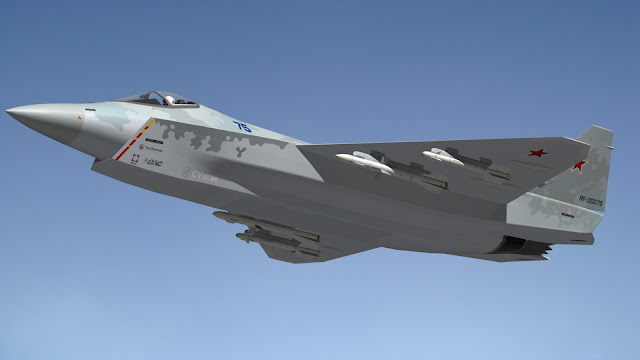
Chemezov compared the cost of a flight hour for Checkmate and F-35 fighters

EGPJET3D


Чемезов сравнил стоимость летного часа истребителей Checkmate и F-35 - ТРК Звезда Новости, 05.11.2021

Anna Nazaykina

09:50 05.11.2021

Russia will present a prototype of the latest fifth-generation fighter jet in the UAE at the Dubai Airshow.

© Photo: UAC, Globallookpress

The cost of a flight hour for the promising Russian fifth-generation fighter Checkmate will be seven times lower than that of its main competitor, the American F-35. Rostec CEO Sergei Chemezov said this to the French newspaper Le Figaro .

“Among the fifth generation single-engine aircraft and previous generation aircraft, only Checkmate's main competitor, the F-35, can boast of comparable performance. However, unlike the latter, our plane is more economically profitable. Let me remind you that the cost of a Checkmate flight hour is seven times lower than that of the F-35, ”he said.

Earlier, the Ministry of Industry and Trade reported that Russia will present a prototype of the latest fifth-generation fighter Checkmate in the UAE at the Dubai Airshow - it will be held from 14 to 18 November in Dubai.

Recall that the Checkmate prototype was first seen at the MAKS-2021 air show. UAC General Director Yuri Slyusar told Zvezda that a wide range of nomenclature allows the new product to perform any kind of tasks, Checkmate is multifunctional.

The first flight of a light single-engine fighter is expected in 2023. Chekmate will be able to accelerate to two speeds of sound, the mass of the fighter's combat load will be 7,400 kg, the range of the fighter will be three thousand kilometers. 


Friday, 5 November 2021

India has suspended a joint project with the Russian Federation of the fifth generation fighter

Sergey Parkhisenko


Индия приостановила совместный с РФ проект истребителя пятого поколения - ИА REGNUM

MOSCOW , November 2, 2021 , 10:00 - REGNUMIndia has suspended a program to create a fifth generation FGFA fighter based on the Russian Su-57, said Dmitry Shugaev , director of the Federal Service for Military-Technical Cooperation .

mil.ru


According to him, the project has been suspended "until the adoption of the Su-57 by the Armed Forces of the Russian Federation."

“The Su-57 is a multifunctional fighter, originally intended for the national air force. But at the same time it has a very high export potential, and this is confirmed by international expert opinion, ”he told RBC.

As reported by IA REGNUM , earlier India officially suspended its participation in the FGFA project, which was carried out in parallel with the development of the Su-57. It should be noted that this happened before the start of test flights of the Russian fifth generation fighter.

HISTORY OF THE ISSUE

The military-industrial complex is a set of organizations and enterprises that carry out a state defense order. The specificity of the military-industrial complex is manifested in the customer's monopoly, special requirements for the quality and technical characteristics of products, their high science intensity and manufacturability; the need to maintain mobilization capacities, reserves of strategic raw materials and materials; in the difficulties of the enterprises of the military-industrial complex entering foreign arms markets, and so on.

A breakthrough in the development of the Russian military-industrial complex took place in 2011 with the development of three main areas: the implementation of the state defense order, (GOZ) modernization of the defense industry, the creation of the necessary legislative framework.

The role of the military-industrial complex in the foreign economic policy of the state is very significant. Defense enterprises account for up to a third of the export of machinery and equipment and enterprises.


Thursday, 4 November 2021

New radar kits abound for the Eurofighter fleet

Lee Wilson


New radar kits abound for the Eurofighter fleet

By Tom Kington

Nov 3, 01:00 PM

Leonardo UK is working on an Mk 2 Eurofighter radar optimized for electronic warfare besides traditional radar functions. (Leonardo UK)

ROME — The first Kuwaiti Eurofighters with new electronically scanned radars onboard took to the skies in Italy in October for test flights, as engineers in the U.K. provided fresh details on the e-scan radar version they are developing for the RAF’s Typhoons.

With progress being made on yet another version for Germany and Spain’s fighters, the Typhoon now has not one but three e-scan radars in the works after years of delays.

The Kuwaiti jets were spotted taking off from Leonardo’s Caselle facility in northern Italy on Oct. 15 for their first test flight ahead of year-end delivery, part of an order of 28 Typhoons by the Gulf state which will boast the so-called Eurofighter Common Radar System Mk 0.

Built by the Euroradar consortium teaming Leonardo Italy, Leonardo UK, Spain’s Indra and Germany’s Hensoldt, the Mk 0 will also equip Qatar’s 24 Typhoons.

Hensoldt and Indra are meanwhile working on an upgrade – the Mk 1 version, which will use transmit/receive modules built in Germany to retrofit roughly 130 German and Spanish aircraft in the mid-2020s.

Going it alone, the UK has developed an Mk 2 which features new components and has been offered to possible Typhoon customer Finland, while Italy, which has long held faith with the Typhoon’s current mechanically scanned Captor radar, decided to sign up to Mk 2 in September.

With financing due to be freed up by Rome on a step-by-step basis, 16 engineers from Leonardo Italy will work on secondment in the UK over the next 18 months to learn about the new radar.

They will cross a firewall to work with British colleagues at Leonardo UK, which has been managing the program for the British Ministry of Defence.

What is well known is that Mk 2 will differ from its fellow Typhoon e-scan radars by offering wideband electronic-attack and electronic-warfare features in addition to more traditional radar capability.

Further innovations will include the ability to passively register emissions from targets and threats providing data that can be fused with data received by the Typhoon’s Defensive Aid Sub-System (DASS) and Pirate infra-red sensor.

The radar will also be able to transmit data, something described as “essential” by Ross Wilson, Leonardo UK’s Typhoon Chief Engineer for Fire Control Radar.

Another big change are the Mk 2′s UK-built transmit/receive modules, which Leonardo refers to as circuits, since they are soldered to the face of the radar, as opposed to modules on the Mk 0 and Mk 1, which are screwed in.

“By soldering them to the board performance can be increased, while overall weight is cut and the density and reliability of the circuits is increased. We continue to invest in key componentry to drive down size and weight, allowing us to maximize the power and aperture available in a fast jet environment,” said Wilson.

Another change is the introduction of gallium nitride (GaN) semi-conductors, considered more powerful than previously used gallium arsenide (GaAs) semi-conductors.

“GaN has been seen as the future, set to take over from GaAs, but for Leonardo UK, both have a role in radar development to achieve the best performance balance for a fast jet application and can be used together,” said Wilson.

With Leonardo UK aiming to deliver the first Mk 2 radar next year to BAE, which is integrating the radar on the Typhoon and is expected to fly it for the first time in 2023, Wilson said it would be “the most capable radar ever produced when it enters service.”
#####


Eurofighter Typhoon: Details

Collins Aerospace and GMF to Transform Indonesian AF C-130H Aircraft With Modern Digital Cockpit

Dutchairplaneshooter


Collins Aerospace and GMF to Transform Indonesian AF C-130H

  • Flight2TM Avionics to transform dated analog system with seven multi-functional displays
  • Modernization will optimize operations, improve situational awareness and minimize aircraft downtime
  • More C-130 upgrades have been fitted with avionics from Collins than from any other single provider in the world

The Indonesian Air Force joins a growing list of customers that have selected Collins Aerospace for its C-130H Hercules military transport aircraft modernization effort. Serving as a contractor to GMF, Collins Aerospace will provide its Flight2™ avionics solution, that transforms dated analog controls into a modern digital glass cockpit and expands Collins’ position as the global leader in C-130 modifications.

Used for a broad range of missions, including personnel and cargo transport, as well as humanitarian efforts, the Flight2™ avionics modification will replace the C-130H’s analog instruments with seven multifunction displays, three control display units and new digital autopilot. In addition, the aircraft will be equipped with the Required Navigation Performance/Area Navigation flight management system, with high altitude release point and computed air release point precision airdrop software. The modernization will help the Indonesian Air Force optimize its operations, improve pilot situational awareness and minimize aircraft downtime.

“We worked closely with GMF and the Indonesian Air Force to leverage our Flight2™ Mobility Mission Application (MMA) architecture, and to tailor the system to meet all the specific mission requirements,” said Dave Schreck, vice president and general manager for Military Avionics and Helicopters at Collins Aerospace. “MMA enables customers to select from a superset of off-the-shelf capabilities, which really maximizes what we can provide for any given budget. In this case, we created a solution that is custom fit to the needs of the Indonesian Air Force.”

Andi Fahrurrozi, CEO of GMF, added, “We are delighted to worl with Collins Aerospace to jointly modernize the C-130H owned by the Indonesian Air Force. GMF, as a proud Indonesian provider appointed by the Ministry of Defense, believes this prestigious project can be done in a timely manner by working closely with Collins Aerospace. This project is a part of GMF's effort to diversify the business and support the defense industry to rejuvenate the fleet and improve flight safety.”

By upgrading to Flight2™, the Indonesian Air Force’s C-130H will be in compliance with the most recent International Civil Aviation Organization standards, while also equipping it with a tactical advantage in military operations.

Collins Aerospace has delivered over 2,900 Flight2™ solutions for military fixed-wing and rotary-wing aircraft including 370 C-130s upgraded, or on contract to be upgraded, in 16 different countries. More C-130 upgrades have been fitted with avionics from Collins than from any other single provider in the world.

Source: Collins Aerospace
Date: Nov 3, 2021

#####

behance.net


C-130J Hercules: Details

Tuesday, 2 November 2021

Rheinmetall and Thales to Continue Taking Care of Tiger Helicopter Simulators in France and Germany

Steve Schilling


Together with its partner Thales, Rheinmetall will continue to look after the helicopter simulators used for training crews of the Tiger attack helicopter. In summer 2021, a contract to this effect was awarded through OCCAR, the European procurement organization. This integrated service support contract, which for Rheinmetall represents sales in the low double-digit million-euro range, runs from 1 January 2022 to 31 December 2025.

Under the terms of the contract, Rheinmetall and Thales will now be taking care of a total of twenty modern Tiger simulators at bases in Le Luc, Fritzlar, Pau and Phalsbourg, as well as providing service and maintenance support. The eight full-mission simulators and twelve cockpit procedure trainers enable crews to train using the latest configuration of the aircraft in service: in France, the Tiger Hélicoptère d’Appui et Destruction (HAD) Block 2, and in Germany, the Unterstützungs¬¬hubschrauber Tiger Step 2 Krypto. The French armed forces and the German Bundeswehr train their personnel in a modern virtual combat environment, contributing to full operational readiness and greater flight safety. The Tiger simulators are among the most advanced full-mission simulators for attack helicopters anywhere. The Tiger is a highly sophisticated weapons system, whose replication in a simulator poses major demands in terms of hardware and software.

In the current order, Rheinmetall, Thales and OCCAR (which stands for Organisation Conjointe de Coopération en Matière d'Armement) are building on years of successful cooperation in the field of simulation and training. OCCAR contracted with the Tiger Aircrew Training Means (ARGE TATM) working group to modernize the simulators currently in use. ARGE TATM is a joint venture of Rheinmetall Electronics GmbH and Thales AVS France SAS. This project was successfully completed at the end of 2019. Future treatment of obsolescent features and further updates, such as the current installation of the latest maintenance releases, make continued cooperation in the Tiger domain appear likely, including follow-up orders.

Source: Rheinmetall AG
Date: Oct 29, 2021


EC665 TIGER HAD: Details

Monday, 1 November 2021

Su-57 production will be accelerated in Russia

Tomek Maniecki


В России ускорят производство Су-57: Будущее: Наука и техника: Lenta.ru

UAC won the competition for the use of augmented reality in the assembly of the Su-57

Photo: Marina Lystseva / TASS

The production of Russian fifth-generation Su-57 aircraft will be accelerated using augmented reality. The main award of the competition of the United Aircraft Corporation (UAC) was given to the project to optimize the production of aircraft parts. This was reported by the press service of the UAC.

The project was developed by specialists of the Komsomolsk-on-Amur Aviation Plant ( KnAAZ ) named after Yuri Gagarin . According to the plant's leading programmer Valery Timokhin, augmented reality technologies will allow imposing a digital model of the unit on a real object. This will help increase the quality and speed of technological operations.

The pilot project involves the use of augmented reality technologies for general inspection of units. After that, the development of KnAAZ specialists is planned to be used in the assembly and painting of serial aircraft.

In August, the assembly of the Russian heavy shock-reconnaissance drone S-70 "Okhotnik" was shown on the TV channel "Zvezda" . The unmanned vehicle can become the wingman of the Su-57 fighter.

In July, Valery Timokhin spoke about work on a project to assemble aircraft using augmented reality technologies. He noted that the new technology will improve the quality of the aircraft painting.

Daniil Irinin


GE Secures $1.58 Billion Contract for F-15EX Engines

 Air Force photo by William R. Lewis


GE Secures $1.58 Billion Contract for F-15EX Engines - Air Force Magazine

Oct. 29, 2021 | By Greg Hadley

An F-15EX Eagle II assigned to the 40th Flight Test Squadron, Eglin Air Force Base, Fla., takes off from Nellis Air Force Base, Nev., Oct. 21, 2021. Air Force photo by William R. Lewis.


General Electric has secured a $1.58 billion contract with the Air Force to build up to 329 engines for the F-15EX, the Pentagon announced Oct. 29. 

The contract will begin with 29 F110-GE-129 engines followed by seven option lots to total a “most probable quantity” of 329 engines if all options are exercised. Work is expected to be completed by June 2031, the contract award states.

GE Aviation had already won the initial contract for a batch of F-15EX engines back in June 2020 as part of an “unusual and compelling urgency acquisition” meant to speed the fourth-generation jet into testing. 

GE delivered the first of those engines in September 2020. Raytheon’s Pratt & Whitney said at the time that it planned to submit a version of its F100 engine for a full competition. The Air Force issued its request for proposal in February, and the Oct. 29 contract award stated there were only two offers received.

If Pratt & Whitney decides to protest the award, it has 10 days to file a protest with the Government Accountability Office.

The contract award for the engine comes just a few days after the F-15EX underwent its first ever operational test mission at Nellis Air Force Base, Nev. The Air Force currently only has two F-15EXs in its entire fleet but plans to expand that in the coming years to anywhere from 144 to 200. At one point, the service said it would need 461 engines for the fighter.

The Air Force’s 2022 budget requested 12 new EXs, and its unfunded priority list asked for 12 more.

Compared with the F-15C, which the Air Force has operated since the 1980s, the F-15EX has a fly-by-wire flight control system, a powerful processor, additional weapon stations, and will employ the Eagle Passive Active Warning and Survivability System (EPAWSS), among other improvements. The jet will also have an open missions systems architecture to facilitate rapid and competitive upgrades. It is not, however, stealthy like the fifth-generation F-35.